



menu

Preventative Commercial Maintenance in Riverside – Minimize Downtime and Protect Your Bottom Line

Scheduled commercial plumbing upkeep designed to eliminate unexpected failures, reduce operating costs, and keep your Riverside facility compliant with California plumbing codes year-round.

Slider Image 1
Slider Image 2
Slider Image 3
Slider Image 4
Slider Image 5
Slider Image 7
Slider Image 8
Slider Image 9
Slider Image 10
Slider Image 11

Why Commercial Properties in Riverside Cannot Afford Reactive Plumbing Strategies

In Riverside's commercial corridor, a single plumbing failure costs more than the repair itself. You lose operational hours, disrupt tenant relationships, and risk health code violations that suspend business licenses. Riverside's hard water, with its high mineral concentration from the Santa Ana River watershed, accelerates scale buildup in commercial lines. This shortens the lifespan of water heaters, clogs aerators, and restricts flow in multi-story buildings. Without routine commercial plumbing inspections, you miss the early warning signs.

Most commercial property managers discover problems after damage occurs. A corroded angle stop fails at 2 a.m., flooding a retail tenant's stockroom. A grease trap overflows because no one scheduled pumping. A backflow preventer fails inspection, and the city red-tags your building. These scenarios share a common thread: they were preventable.

Preventive commercial plumbing services shift the equation. Commercial plumbing maintenance plans focus on system longevity, not emergency response. You gain predictable operating expenses, extended equipment life, and documentation that satisfies California Title 24 requirements. In a region where water costs climb annually, commercial plumbing service agreements reduce waste and improve efficiency. The alternative is paying emergency rates, managing tenant complaints, and risking your reputation when systems fail during business hours.

Why Commercial Properties in Riverside Cannot Afford Reactive Plumbing Strategies
How Strategic Maintenance Protocols Extend System Life and Cut Operating Costs

How Strategic Maintenance Protocols Extend System Life and Cut Operating Costs

Preventative commercial maintenance operates on a different model than residential service. You need documentation, system mapping, and risk assessment tied to your facility's operational demands. Evergreen Plumbing Riverside structures maintenance around your plumbing infrastructure's specific vulnerabilities.

We start with a baseline assessment. Technicians map your water distribution system, identify all fixtures, document shutoff locations, and test pressure at multiple points. This creates a reference file for future service. We inspect backflow devices, pressure-reducing valves, and expansion tanks for compliance and function. In multi-tenant buildings, we trace branch lines to isolate zones, reducing the impact of future repairs.

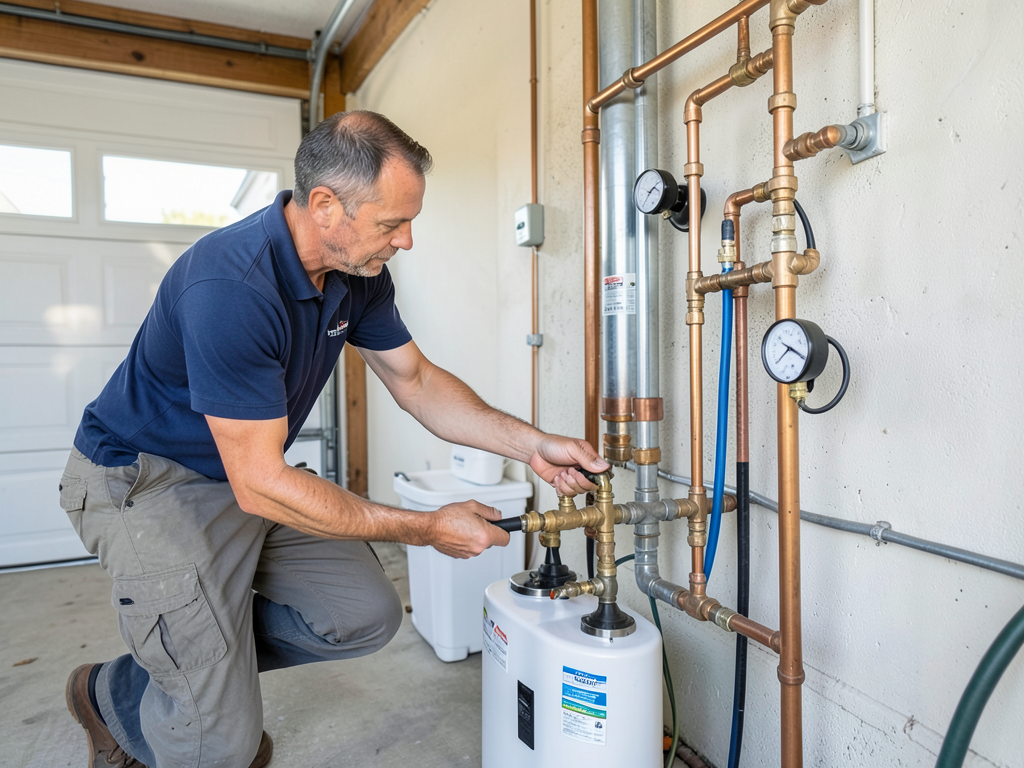
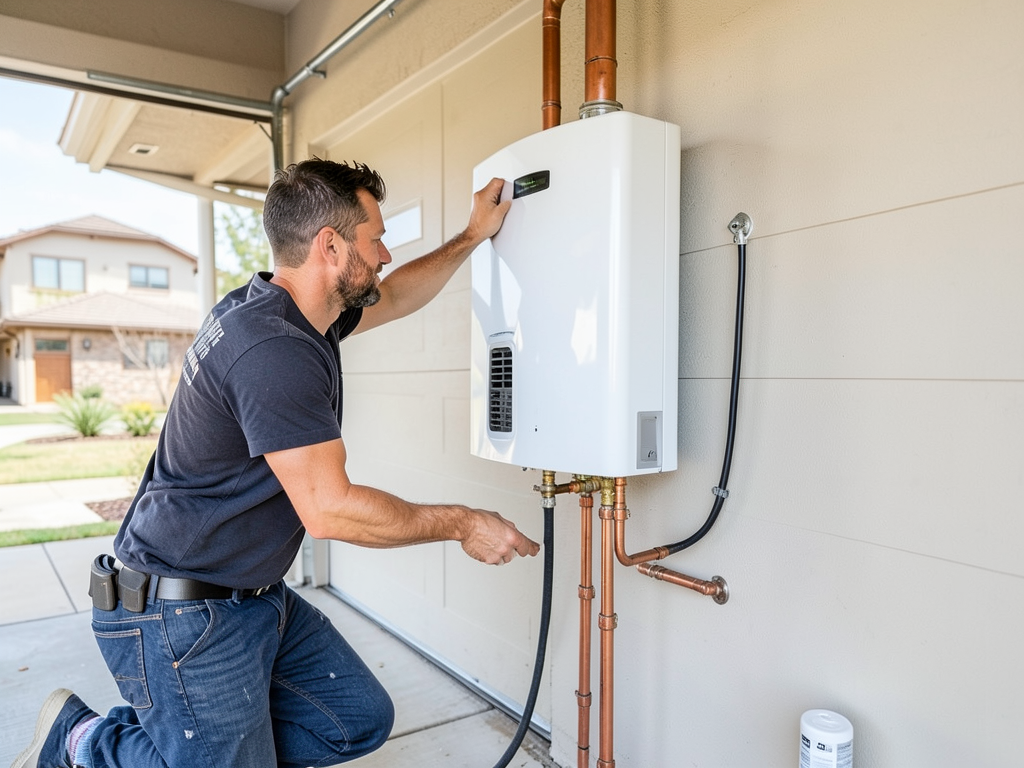
Scheduled inspections follow a tiered approach. High-risk components like water heaters, sewage ejector pumps, and grease interceptors receive quarterly attention. We check anode rods, flush sediment, and test thermostat calibration. Drain lines undergo camera inspection annually to detect root intrusion or bellied pipe sections before they collapse. We document findings with time-stamped images and pressure test results.

The service agreement model eliminates surprise costs. You budget maintenance as a fixed monthly expense. Priority scheduling guarantees technician availability when you need it, and parts procurement happens proactively. We track replacement cycles for components with known lifespans, ordering parts before failure occurs. This approach reduces emergency service calls by 60 percent and extends equipment life by 30 percent compared to reactive maintenance strategies.

What Happens During Your Commercial Maintenance Visit

Preventative Commercial Maintenance in Riverside – Minimize Downtime and Protect Your Bottom Line
01

System Audit and Documentation

Our team begins with a comprehensive walkthrough of your facility's plumbing system. We update existing documentation, photograph all accessible components, and test water pressure at critical points. This audit identifies changes since the last visit, tracks deterioration rates, and highlights components nearing end of life. You receive a digital report with annotated images and prioritized recommendations within 24 hours.
02

Preventive Component Servicing

Technicians perform scheduled maintenance on all critical systems. Water heaters are flushed, anode rods inspected, and temperature-pressure relief valves tested. Backflow preventers are disassembled, cleaned, and tested per ASSE standards. Grease traps are pumped if accumulation exceeds 25 percent capacity. Drain lines receive enzymatic treatment to prevent biofilm buildup. All work follows manufacturer specifications and California plumbing code requirements.
03

Compliance Verification and Reporting

Each visit concludes with compliance documentation. We verify backflow device certifications, cross-connection control, and ADA fixture compliance. You receive a maintenance log suitable for health department inspections, insurance audits, and tenant disclosures. Our system flags upcoming certification deadlines and schedules renewal inspections automatically. This eliminates administrative burden and ensures continuous compliance with Riverside municipal codes.

Why Riverside Commercial Clients Choose Local Expertise Over National Service Chains

National plumbing franchises send different technicians to each visit. They lack facility knowledge, cannot reference past service history, and escalate decisions to regional managers. Evergreen Plumbing Riverside assigns the same technician team to your property. They learn your system's quirks, recognize patterns, and make informed recommendations based on facility-specific data.

Our familiarity with Riverside's infrastructure matters. We know which areas receive the hardest water, where main line pressure fluctuates, and which neighborhoods experience frequent sewer lateral issues due to mature tree roots. This local knowledge informs maintenance strategies. A property near the 91 and 60 interchange requires more frequent backflow testing due to higher sediment loads. Buildings in the downtown historic district face unique challenges with aging cast iron stacks and galvanized supply lines.

We maintain direct relationships with Riverside's building department and understand local inspection protocols. When you need permit documentation for tenant improvements or system upgrades, we provide drawings and calculations that meet city requirements on the first submission. This eliminates revision cycles and accelerates project timelines.

Commercial clients value response capacity during emergencies. Our local dispatch guarantees a technician onsite within two hours for service agreement holders. We stock commercial-grade parts for immediate replacement, eliminating the multi-day delays common with national chains that must order from regional warehouses. When system failure threatens your operations, local capacity becomes the difference between a two-hour disruption and a two-day closure.

What Your Maintenance Agreement Includes and How It Protects Your Investment

Service Frequency and Response Times

Maintenance visits occur quarterly for most commercial facilities, with monthly service available for high-demand properties like restaurants and medical offices. Each visit includes a full system inspection, preventive component servicing, and compliance documentation. Service agreement holders receive priority emergency response, with guaranteed two-hour arrival for critical failures. After-hours and weekend service carries no premium rate for agreement members. You schedule visits around your operational needs, minimizing tenant disruption and maintaining business continuity throughout the service window.

Inspection Protocols and System Assessment

Each maintenance visit follows a standardized 47-point inspection checklist tailored to your facility type. Technicians test all shutoff valves, inspect exposed pipe for corrosion, verify proper fixture operation, and document water pressure readings. Camera inspections of main drain lines occur annually to detect deterioration before failure. We test backflow preventers per ASSE 5000 standards and provide certification documentation. All findings are logged in your facility's digital service history, creating a longitudinal record that tracks system health over time and supports capital planning decisions.

System Performance and Efficiency Gains

Preventive maintenance extends equipment life by 30 to 40 percent compared to reactive service models. Regular descaling of water heaters improves thermal efficiency by up to 20 percent, reducing energy costs. Drain line treatment prevents emergency stoppages that disrupt operations and require premium service rates. Pressure regulation protects fixtures from premature failure and reduces water waste. Your system operates at design efficiency, minimizing utility expenses and avoiding the cascading failures common in neglected commercial plumbing systems.

Agreement Terms and Service Guarantees

Service agreements include parts and labor for all scheduled maintenance visits. You receive a 20 percent discount on non-routine repairs and parts replacement. We guarantee response times and provide backup service if your assigned technician is unavailable. Agreements are month-to-month with no long-term commitment required. All work meets California plumbing code requirements, and we maintain comprehensive liability coverage specific to commercial service. Detailed service records are available 24/7 through our client portal, giving you instant access to inspection reports, parts replacement history, and compliance documentation.

Frequently Asked Questions

You Have Questions,
We Have Answers

What are the 5 types of preventive maintenance? +

The five types of preventive maintenance are time-based maintenance, usage-based maintenance, predictive maintenance, prescriptive maintenance, and condition-based maintenance. Time-based maintenance follows a fixed schedule regardless of equipment condition. Usage-based maintenance triggers after specific operating hours or cycles. Predictive maintenance uses data analysis and sensors to forecast failures. Prescriptive maintenance combines predictive data with actionable recommendations. Condition-based maintenance monitors real-time performance indicators to determine service needs. Commercial facilities in Riverside benefit from combining multiple types to address varying equipment demands across HVAC systems, plumbing infrastructure, and electrical components, particularly given the region's heat stress on mechanical systems.

What are the 7 elements of preventive maintenance? +

The seven elements of preventive maintenance include inspection protocols, cleaning procedures, lubrication schedules, adjustment procedures, replacement of wear components, testing and calibration, and detailed record-keeping. Each element targets specific failure modes before they escalate into costly breakdowns. Inspections identify early warning signs. Cleaning prevents efficiency loss from dust and debris accumulation. Lubrication reduces friction and wear. Adjustments maintain optimal performance parameters. Component replacement addresses predictable wear patterns. Testing verifies system functionality and safety. Documentation tracks maintenance history and identifies recurring issues. For Riverside commercial properties, these elements must account for desert dust infiltration and thermal cycling that accelerates component degradation.

How much does preventive maintenance cost for commercial HVAC? +

Commercial HVAC preventive maintenance costs vary based on system size, complexity, and service frequency. Factors include tonnage capacity, equipment age, accessibility, and contract terms. Quarterly maintenance typically costs less per visit than annual service when averaged. Multi-system properties often negotiate volume pricing. Riverside facilities face higher cooling demands and dust exposure, which may require more frequent filter changes and coil cleaning than moderate climates. Budget for labor rates, replacement parts, refrigerant top-offs, and emergency callbacks between scheduled visits. Contract maintenance typically reduces total annual costs compared to reactive service by preventing major failures and extending equipment lifespan.

What are examples of preventative maintenance? +

Preventative maintenance examples include filter replacement, belt inspection and tensioning, drain line clearing, refrigerant level checks, electrical connection tightening, condenser coil cleaning, thermostat calibration, motor bearing lubrication, safety control testing, and ventilation system balancing. For commercial plumbing, examples include water heater flushing, backflow preventer testing, trap cleaning, fixture inspection, leak detection, pressure regulator checks, and sewer line inspection. Riverside properties benefit from regular air handler cleaning due to airborne dust, quarterly roof drain clearing before monsoon season, and expanded coil maintenance to combat reduced heat transfer efficiency from mineral deposits in hard water systems.

What are the 4 P's of maintenance? +

The four P's of maintenance are preserve, predict, prevent, and perform. Preserve focuses on maintaining equipment in original operating condition through routine care. Predict uses data and monitoring to forecast potential failures before they occur. Prevent implements actions that stop breakdowns from happening through scheduled interventions. Perform ensures all maintenance activities meet quality standards and achieve intended results. Commercial operations in Riverside must emphasize the predict element due to extreme temperature swings that accelerate component wear. This framework helps facility managers allocate resources effectively, reduce downtime, control costs, and maintain regulatory compliance across building systems.

What is the 10% rule of preventive maintenance? +

The 10% rule of preventive maintenance states that organizations should allocate roughly 10% of their total maintenance budget to preventive activities rather than reactive repairs. This ratio serves as a benchmark for maintenance program maturity. Facilities spending less than 10% typically operate in reactive mode with higher total costs and more frequent emergencies. Those exceeding 10% often achieve better equipment reliability and longer asset lifespans. For Riverside commercial properties, this percentage may increase slightly due to harsh environmental conditions that demand more frequent HVAC maintenance, accelerated filter replacement cycles, and proactive attention to cooling system components.

What is included in a PM checklist? +

A PM checklist includes specific inspection points, measurement criteria, acceptable ranges, required tools, replacement parts, safety procedures, and documentation requirements. HVAC checklists cover filter condition, refrigerant pressures, electrical draws, belt wear, bearing temperatures, airflow measurements, and control sequences. Plumbing checklists address fixture operation, leak detection, water pressure, drain flow, backflow prevention, and water heater performance. Electrical checklists examine connections, panel temperatures, breaker operation, and grounding integrity. Riverside facilities should include coil condition assessments, condensate drain flow verification, and outdoor unit clearance checks to address dust accumulation and vegetation growth in commercial landscaping.

What are the 5 basic maintenance skills? +

The five basic maintenance skills are mechanical aptitude, electrical knowledge, troubleshooting ability, attention to detail, and communication proficiency. Mechanical aptitude covers understanding how components interact and wear patterns develop. Electrical knowledge ensures safe work with motors, controls, and power systems. Troubleshooting ability identifies root causes rather than treating symptoms. Attention to detail catches early warning signs during inspections. Communication proficiency documents findings and explains issues to facility managers. Riverside commercial maintenance requires additional expertise in water chemistry management due to hard water effects on equipment, desert climate impacts on seals and gaskets, and California Title 24 energy compliance requirements.

What are the 5 pillars of TPM? +

The five pillars of Total Productive Maintenance are autonomous maintenance, planned maintenance, quality maintenance, focused improvement, and early equipment management. Autonomous maintenance trains operators to perform basic care and inspections. Planned maintenance eliminates breakdowns through scheduling. Quality maintenance reduces defects by maintaining equipment precision. Focused improvement targets chronic losses through root cause analysis. Early equipment management designs maintainability into new systems. Commercial facilities in Riverside applying TPM principles reduce water waste through leak elimination, lower energy costs through optimal equipment performance, and extend system life by addressing the cumulative stress from continuous cooling demands.

What is the $5000 AC rule? +

The $5000 AC rule refers to a threshold where repair costs approach or exceed significant percentages of replacement cost, triggering financial analysis of repair versus replacement. Calculate by multiplying equipment age by repair cost. If the result exceeds replacement cost, replacement often makes financial sense. This guideline considers efficiency gains, warranty coverage, and remaining useful life. Riverside commercial properties face this decision frequently due to accelerated equipment aging from constant cooling loads and hard water scale accumulation. Factor in current refrigerant costs, utility rebates for high-efficiency replacements, and business disruption costs when applying this rule to major commercial systems.

How Riverside's Water Quality Demands More Frequent Commercial Maintenance Intervals

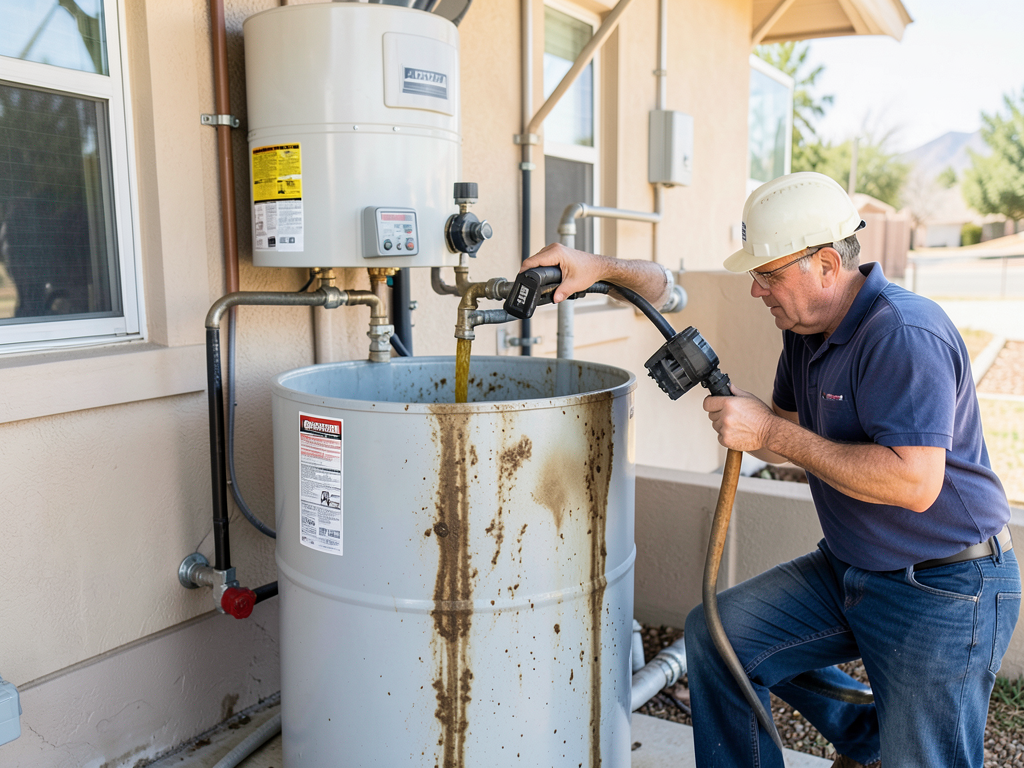
Riverside's water supply contains 250 to 350 parts per million of total dissolved solids, primarily calcium and magnesium. This places it in the "very hard" category. Commercial water heaters experience accelerated anode rod depletion, requiring replacement every 18 to 24 months instead of the standard three to five years. Scale accumulation in tankless units reduces flow rates within 12 months without descaling. Restaurant properties with high hot water demand require quarterly maintenance to prevent efficiency loss and premature equipment failure. These conditions make routine commercial plumbing inspections non-negotiable for facilities management.

Evergreen Plumbing Riverside has serviced commercial properties throughout the Greater Riverside metro for years, building relationships with property managers, facility directors, and business owners who recognize the value of local expertise. We understand California Title 24 energy code requirements, AB 1953 lead-free compliance mandates, and Riverside's specific backflow testing protocols. Our technicians receive ongoing training in commercial system design and California plumbing code updates. When you contract with a local provider, you gain institutional knowledge that protects your investment and simplifies regulatory compliance.
Plumbing Services in The Riverside Area

We are proud to serve the entire Riverside community and its surrounding areas. Our local presence ensures we can provide swift and efficient service when you need it most. You can view our service area on the map to see if we cover your location. We're dedicated to bringing professional plumbing solutions right to your doorstep.

Address:
Evergreen Plumbing Riverside, 3400 Central Ave, Riverside, CA, 92506

Additional Services We Offer

Our news updates

Latest Articles & News from The Blogs

Why that PVC pipe dripping near your Sycamore Highlands foundation needs attention Seeing water dripping from a PVC pipe near…

Why that PVC pipe dripping near your Sycamore Highlands foundation needs attention

Why that PVC pipe dripping near your Sycamore Highlands foundation needs attention Seeing water dripping from a PVC pipe near…

Using your water meter to check for hidden leaks in your Northside property

Using your water meter to check for hidden leaks in your Northside property Finding a hidden water leak in your…

Why pouring liquid grease down your Eastside kitchen drain is a recipe for disaster

Why pouring liquid grease down your Eastside kitchen drain is a recipe for disaster Eastside Riverside homeowners face a hidden…

Contact Us

Stop paying emergency rates for preventable failures. Call (951) 309-5599 to schedule a facility assessment and receive a customized maintenance proposal. Evergreen Plumbing Riverside eliminates surprise costs and keeps your systems running.