How to protect your plumbing from Riverside’s hard water without a salt system
Riverside’s hard water contains 12-15 grains per gallon of dissolved calcium and magnesium, creating scale that damages pipes, water heaters, and appliances. Traditional water softeners remove these minerals using salt-based ion exchange, but many homeowners dislike the slippery feel, the ongoing salt costs, and the environmental impact of brine discharge. Salt-free water conditioners offer an alternative by preventing scale formation without removing beneficial minerals or creating wastewater. Why homeowners in Orangecrest are upgrading to tankless water heaters this year.
Template Assisted Crystallization (TAC) technology changes how hard water minerals behave. Instead of removing calcium and magnesium, TAC systems transform these minerals into microscopic crystals that cannot adhere to surfaces. The treated water maintains its mineral content while eliminating the primary cause of scale buildup throughout your plumbing system. The most common plumbing emergencies in La Sierra and how to solve them.
Western Municipal Water District reports that Riverside’s water hardness consistently exceeds 12 GPG, with some areas reaching 15 GPG during dry seasons when Colorado River water dominates the supply. This level of hardness causes visible white scale on faucets, reduces water heater efficiency by up to 30%, and shortens appliance lifespans by 2-4 years. Salt-free systems prevent these issues while complying with California’s strict brine discharge regulations. Western Municipal Water District water quality reports.
The technology works through specialized media containing tiny polymer beads. As hard water flows through, calcium and magnesium ions attach to nucleation sites on the beads. These minerals crystallize into stable structures that remain suspended in water rather than forming scale on pipes and fixtures. The process requires no electricity, produces no wastewater, and needs media replacement only every 3-5 years. Emergency Water Shut-Off Service.
Installation typically takes 2-3 hours for a standard single-family home. The system connects to the main water line after the meter, treating all water entering the house. Unlike traditional softeners that require a drain line and electrical outlet, salt-free conditioners need only sufficient space and access to the main line. Most units measure 10-12 inches in diameter and 48-52 inches tall.. Read more about Removing stubborn hard water stains from your Riverside bathroom fixtures.
Benefits extend beyond scale prevention. Salt-free systems eliminate the need to carry heavy salt bags, reduce water usage by avoiding regeneration cycles, and preserve beneficial minerals that many people prefer for drinking and cooking. The treated water feels more natural than salt-softened water, with no slippery sensation during showering.
Cost considerations favor salt-free systems over five-year periods. While initial purchase prices range from $1,200 to $2,500 compared to $800-$1,500 for basic softeners, salt-free systems eliminate monthly salt costs of $20-$30 and avoid water waste from regeneration cycles. The lack of moving parts and electrical components also reduces maintenance expenses.
Local water quality affects system sizing. Homes in Canyon Crest and Orangecrest areas often need larger units due to higher hardness levels from Colorado River water sources. Properties near the Santa Ana River may experience slightly lower hardness but still benefit from scale prevention. A professional water test determines exact hardness levels and appropriate system size. How to find a local plumber in Mission Grove who actually answers the phone.
Performance differences become apparent within weeks. Scale buildup stops progressing on faucets, showerheads, and appliances. Water heaters maintain efficiency longer, reducing energy costs. Dishwashers and washing machines operate more effectively without mineral interference. The most noticeable improvement occurs in areas with visible scale, where existing deposits stop growing and gradually become easier to clean.
Environmental benefits align with California’s water conservation goals. Traditional softeners discharge 50-150 gallons of brine solution during each regeneration cycle, totaling 1,000-3,000 gallons monthly. Salt-free systems produce zero wastewater while still preventing the scale damage that forces premature appliance replacement and increases landfill waste.
Maintenance requirements remain minimal. Annual system checks ensure proper operation, and media replacement every 3-5 years costs $300-$500 depending on household size and water usage. No salt monitoring, resin bed cleaning, or valve adjustments are necessary. The system operates continuously without user intervention.
Compatibility with existing plumbing varies by home age and material. Modern PEX and copper systems work seamlessly with salt-free technology. Older galvanized steel pipes may already have internal scale that salt-free systems cannot remove, though they prevent additional buildup. Professional assessment determines whether existing scale impacts system effectiveness. Plumbing Riverside.
Health considerations favor mineral retention. Calcium and magnesium provide dietary benefits that ion exchange systems remove entirely. The World Health Organization notes that hard water contributes to daily mineral intake, particularly in areas where dietary sources may be limited. Salt-free conditioning preserves these minerals while eliminating scale formation.
Installation timing affects system performance. Spring installations allow observation through summer months when water hardness typically peaks due to reduced local reservoir contributions. This timing helps homeowners evaluate effectiveness during the most challenging water conditions Riverside experiences annually.
System sizing calculations consider household occupancy, water usage patterns, and local hardness levels. A family of four using 12,000 gallons monthly in a 15 GPG area needs a unit rated for at least 40,000 grains of hardness capacity. Undersized systems require more frequent media replacement and may not prevent scale effectively.
Cost recovery occurs through multiple channels. Energy savings from maintained water heater efficiency can offset system costs within 3-4 years. Extended appliance lifespans delay replacement expenses by 2-3 years. Reduced cleaning product usage and eliminated salt purchases contribute to ongoing savings.
Local regulations favor salt-free alternatives. California’s brine discharge restrictions, particularly in groundwater-sensitive areas like Riverside’s basin, make traditional softeners problematic for some properties. Salt-free systems comply with all local ordinances while providing equivalent scale prevention benefits.
Performance verification uses simple tests. Technicians measure water hardness before and after installation, check for scale formation on test surfaces, and monitor water heater efficiency over time. Most homeowners notice improvements in water feel and cleaning effectiveness within the first month of operation.
System longevity exceeds 15 years with proper maintenance. The media bed typically lasts 3-5 years, while the tank and control head function for the system’s entire lifespan. This durability compares favorably to traditional softeners, which often require valve repairs or resin bed replacement after 8-10 years. EPA information on water hardness and scale prevention.
Installation locations vary by home configuration. Indoor installations protect systems from temperature extremes but require dedicated space. Outdoor installations save interior space but need freeze protection in rare cold snaps. Professional installers evaluate each property’s specific requirements during the assessment phase.
Water quality testing reveals important details. Total dissolved solids, pH levels, and specific mineral content affect system sizing and media selection. Some Riverside areas experience iron or manganese that can impact performance, requiring pre-filtration in certain cases.
Emergency preparedness benefits include continued water availability during power outages. Unlike electronic softeners that may lock up without power, salt-free systems operate continuously through any utility disruption. This reliability proves valuable during California’s occasional grid instability events.
System expansion accommodates future needs. Modular designs allow adding capacity for home additions or increased occupancy. Media replacement involves simple tank opening rather than complete system replacement, reducing long-term costs.
Professional installation ensures optimal performance. Proper flow rates, correct media loading, and appropriate system sizing require experience with local water conditions. DIY installation often results in undersized systems or improper media loading that reduces effectiveness.
Call (951) 309-5599 today to schedule your inspection and learn how salt-free water conditioning can protect your Riverside home’s plumbing without the drawbacks of traditional softeners.
Comparison: Salt-Free Conditioner vs. Traditional Water Softener
| Feature | Salt-Free Conditioner | Traditional Softener |
|---|---|---|
| Initial Cost | $1,200 – $2,500 | $800 – $1,500 |
| Monthly Operating Cost | $0 – $5 (media replacement) | $20 – $30 (salt bags) |
| Water Waste | None | 1,000 – 3,000 gallons/month |
| Mineral Content | Preserved (calcium/magnesium) | Removed (ion exchange) |
| Maintenance Frequency | Every 3-5 years | Monthly salt addition |
| Feel of Water | Natural, no slippery feel | Slippery, soapy feel |
| Environmental Impact | Zero brine discharge | High brine discharge |
Installation Process for Riverside Homes
- Water Quality Assessment
Technician tests water hardness, pH, and mineral content at multiple locations to determine exact system requirements.
- System Sizing Calculation
Household size, water usage patterns, and local hardness levels determine appropriate media capacity and flow rate requirements.
- Location Selection
Installers evaluate indoor versus outdoor placement, considering freeze protection needs and space availability near main water line.
- Main Line Access
Plumber locates and prepares the main water line entry point, typically in garage, utility room, or exterior wall.
- System Installation
Mounting bracket installation, media tank connection, and bypass valve setup complete the physical installation process.
- Initial Operation Testing
Water flow testing ensures proper pressure, no leaks, and correct media activation before system commissioning.
Frequently Asked Questions
Will a salt-free system remove existing scale buildup?
Salt-free conditioners prevent new scale formation but cannot remove existing deposits. Over time, treated water makes existing scale easier to clean, and scale stops progressing. For severe buildup, professional pipe cleaning may be recommended before installation.
Is salt-free technology legal in California?
Yes, salt-free systems are fully legal throughout California. They actually align with state water conservation goals since they produce no brine discharge. Many areas with brine discharge restrictions specifically permit salt-free alternatives.
How long does the media last?
Media typically lasts 3-5 years depending on water hardness and household usage. A family of four in Riverside’s 12-15 GPG water might need replacement every 4 years, while lighter usage could extend media life to 5 years or longer.
Can I install this system myself?
Professional installation is strongly recommended. Proper sizing, media loading, and system integration require experience. DIY installation often results in undersized systems or improper setup that reduces effectiveness and may void warranties.
What maintenance is required?
Annual system checks ensure proper operation. Media replacement every 3-5 years is the primary maintenance task. No salt monitoring, resin bed cleaning, or valve adjustments are necessary. The system operates continuously without user intervention.
How do I know if it’s working?
Performance verification includes water hardness testing before and after installation, monitoring for new scale formation on fixtures, and observing improvements in water heater efficiency. Most homeowners notice differences in water feel and cleaning effectiveness within the first month.
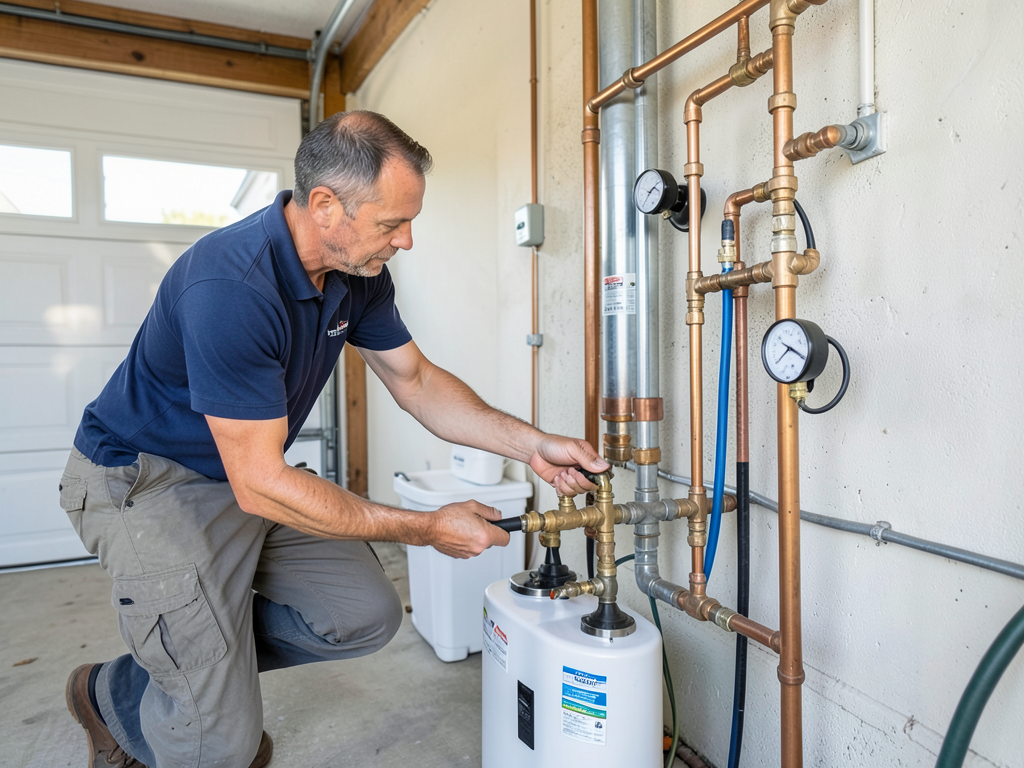
Technical diagram showing Template Assisted Crystallization process with calcium and magnesium ions transforming into stable crystals that flow through pipes without adhering to surfaces.

Close-up photo of a salt-free water conditioner media tank showing the specialized polymer beads that create nucleation sites for mineral crystallization.
Before and after comparison showing scale-free faucets and fixtures in a Riverside home after salt-free system installation, with visible reduction in white mineral deposits.
Pick up the phone and call (951) 309-5599 before the next scale buildup damages your water heater or appliances. Our local technicians understand Riverside’s specific water conditions and can recommend the right system for your home.
You may also find this helpful. Why your ice maker stopped working or tastes like plastic in your Orangecrest home.
{
“@context”: “https://schema.org”,
“@type”: “BlogPosting”,
“headline”: “How to protect your plumbing from Riverside’s hard water without a salt system”,
“description”: “Learn how salt-free water conditioners prevent Riverside’s 12-15 GPG hard water scale without salt, brine waste, or slippery water. Local water quality facts included.”,
“wordCount”: 1785,
“datePublished”: “2026-06-10T15:12:00.000Z”,
“dateModified”: “2026-06-10T15:12:00.000Z”,
“inLanguage”: “en-US”,
“mainEntityOfPage”: {
“@type”: “WebPage”,
“@id”: “https://evergreenplumbingriverside.com”
},
“publisher”: {
“@type”: “LocalBusiness”,
“name”: “Evergreen Plumbing Riverside”,
“url”: “https://evergreenplumbingriverside.com”
},
“author”: {
“@type”: “Organization”,
“name”: “Evergreen Plumbing Riverside”,
“url”: “https://evergreenplumbingriverside.com”
},
“image”: {
“@type”: “ImageObject”,
“url”: “https://evergreenplumbingriverside.com/wp-content/uploads/2026/03/how-to-protect-your-plumbing-from-riverside-s-hard-1.png”
}
}
{
“@context”: “https://schema.org”,
“@type”: “Plumber”,
“name”: “Evergreen Plumbing Riverside”,
“url”: “https://evergreenplumbingriverside.com”,
“address”: {
“@type”: “PostalAddress”,
“addressLocality”: “Riverside”
},
“areaServed”: {
“@type”: “City”,
“name”: “Riverside”
}
}
{
“@context”: “https://schema.org”,
“@type”: “FAQPage”,
“mainEntity”: [
{
“@type”: “Question”,
“name”: “Will a salt-free system remove existing scale buildup?”,
“acceptedAnswer”: {
“@type”: “Answer”,
“text”: “Salt-free conditioners prevent new scale formation but cannot remove existing deposits. Over time, treated water makes existing scale easier to clean, and scale stops progressing. For severe buildup, professional pipe cleaning may be recommended before installation.”
}
},
{
“@type”: “Question”,
“name”: “Is salt-free technology legal in California?”,
“acceptedAnswer”: {
“@type”: “Answer”,
“text”: “Yes, salt-free systems are fully legal throughout California. They actually align with state water conservation goals since they produce no brine discharge. Many areas with brine discharge restrictions specifically permit salt-free alternatives.”
}
},
{
“@type”: “Question”,
“name”: “How long does the media last?”,
“acceptedAnswer”: {
“@type”: “Answer”,
“text”: “Media typically lasts 3-5 years depending on water hardness and household usage. A family of four in Riverside’s 12-15 GPG water might need replacement every 4 years, while lighter usage could extend media life to 5 years or longer.”
}
},
{
“@type”: “Question”,
“name”: “Can I install this system myself?”,
“acceptedAnswer”: {
“@type”: “Answer”,
“text”: “Professional installation is strongly recommended. Proper sizing, media loading, and system integration require experience. DIY installation often results in undersized systems or improper setup that reduces effectiveness and may void warranties.”
}
},
{
“@type”: “Question”,
“name”: “What maintenance is required?”,
“acceptedAnswer”: {
“@type”: “Answer”,
“text”: “Annual system checks ensure proper operation. Media replacement every 3-5 years is the primary maintenance task. No salt monitoring, resin bed cleaning, or valve adjustments are necessary. The system operates continuously without user intervention.”
}
},
{
“@type”: “Question”,
“name”: “How do I know if it’s working?”,
“acceptedAnswer”: {
“@type”: “Answer”,
“text”: “Performance verification includes water hardness testing before and after installation, monitoring for new scale formation on fixtures, and observing improvements in water heater efficiency. Most homeowners notice differences in water feel and cleaning effectiveness within the first month.”
}
}
]
}
{
“@context”: “https://schema.org”,
“@type”: “HowTo”,
“name”: “How to Install a Salt-Free Water Conditioner”,
“step”: [
{
“@type”: “HowToStep”,
“position”: 1,
“name”: “Water Quality Assessment”,
“text”: “Technician tests water hardness, pH, and mineral content at multiple locations to determine exact system requirements.”
},
{
“@type”: “HowToStep”,
“position”: 2,
“name”: “System Sizing Calculation”,
“text”: “Household size, water usage patterns, and local hardness levels determine appropriate media capacity and flow rate requirements.”
},
{
“@type”: “HowToStep”,
“position”: 3,
“name”: “Location Selection”,
“text”: “Installers evaluate indoor versus outdoor placement, considering freeze protection needs and space availability near main water line.”
},
{
“@type”: “HowToStep”,
“position”: 4,
“name”: “Main Line Access”,
“text”: “Plumber locates and prepares the main water line entry point, typically in garage, utility room, or exterior wall.”
},
{
“@type”: “HowToStep”,
“position”: 5,
“name”: “System Installation”,
“text”: “Mounting bracket installation, media tank connection, and bypass valve setup complete the physical installation process.”
},
{
“@type”: “HowToStep”,
“position”: 6,
“name”: “Initial Operation Testing”,
“text”: “Water flow testing ensures proper pressure, no leaks, and correct media activation before system commissioning.”
}
],
“image”: “https://evergreenplumbingriverside.com/wp-content/uploads/2026/03/how-to-protect-your-plumbing-from-riverside-s-hard-1.png”
}
{
“@context”: “https://schema.org”,
“@type”: “BreadcrumbList”,
“itemListElement”: [
{
“@type”: “ListItem”,
“position”: 1,
“name”: “Home”,
“item”: “https://evergreenplumbingriverside.com”
},
{
“@type”: “ListItem”,
“position”: 2,
“name”: “Blog”,
“item”: “https://evergreenplumbingriverside.com/blog”
},
{
“@type”: “ListItem”,
“position”: 3,
“name”: “How to protect your plumbing from Riverside’s hard water without a salt system”
}
]
}
{
“@context”: “https://schema.org”,
“@type”: “Service”,
“serviceType”: “Plumbing”,
“provider”: {
“@type”: “LocalBusiness”,
“name”: “Evergreen Plumbing Riverside”,
“url”: “https://evergreenplumbingriverside.com”
},
“areaServed”: {
“@type”: “City”,
“name”: “Riverside”
},
“description”: “Learn how salt-free water conditioners prevent Riverside’s 12-15 GPG hard water scale without salt, brine waste, or slippery water. Local water quality facts included.”
}