Why Orangecrest Homeowners Are Switching to Tankless Water Heaters This Year
Homeowners in Orangecrest are making the switch to tankless water heaters faster than ever in 2026. With rising energy costs, hard water challenges, and the demand for endless hot water in multi-bathroom homes, tankless systems offer a compelling upgrade for Riverside’s suburban neighborhoods. Riverside Public Utilities Rebates.
The 92508 ZIP code features many homes built in the 1990s and 2000s where traditional tank heaters are reaching the end of their lifespan. Local families are discovering that tankless technology not only saves space in their garages but also cuts utility bills by up to 30% while providing continuous hot water for busy households.. Read more about How to find a local plumber in Mission Grove who actually answers the phone.
Orangecrest’s water quality presents unique challenges that make tankless upgrades particularly valuable. The area’s hard water, with mineral content averaging 12-15 grains per gallon, can destroy traditional tank heaters through sediment buildup. Tankless systems with proper scale prevention technology handle this water chemistry much more effectively.. Read more about Real solutions for low water pressure in your Orangecrest home.
Beyond performance benefits, Riverside Public Utilities offers rebates up to $500 for qualifying tankless installations, making the upgrade more affordable than ever. Combined with SoCalGas energy efficiency incentives, many Orangecrest families are finding the return on investment compelling enough to act now. SoCalGas Energy Efficiency Rebates.
The Orangecrest Advantage: Why Tankless Makes Sense Here
Orangecrest’s suburban layout creates perfect conditions for tankless water heater adoption. Most homes feature two to three bathrooms, home offices, and modern appliances that demand reliable hot water delivery throughout the day.. Read more about Who to call for fast water heater repair in the Arlington area.
The typical Orangecrest home built between 1995 and 2005 houses a 40-50 gallon tank heater that struggles to keep up with today’s water usage patterns. When teenagers take long showers while the dishwasher runs and someone is doing laundry, traditional tanks simply can’t maintain temperature.. Read more about Is a heat pump water heater a better choice for your Sycamore Highlands home than gas?.
Tankless systems eliminate this problem entirely. Instead of storing 40-50 gallons of water and constantly reheating it, these units heat water on demand as it flows through the system. This means no more cold showers during peak usage times.. Read more about The difference between water softeners and whole-house filtration for Highgrove families.
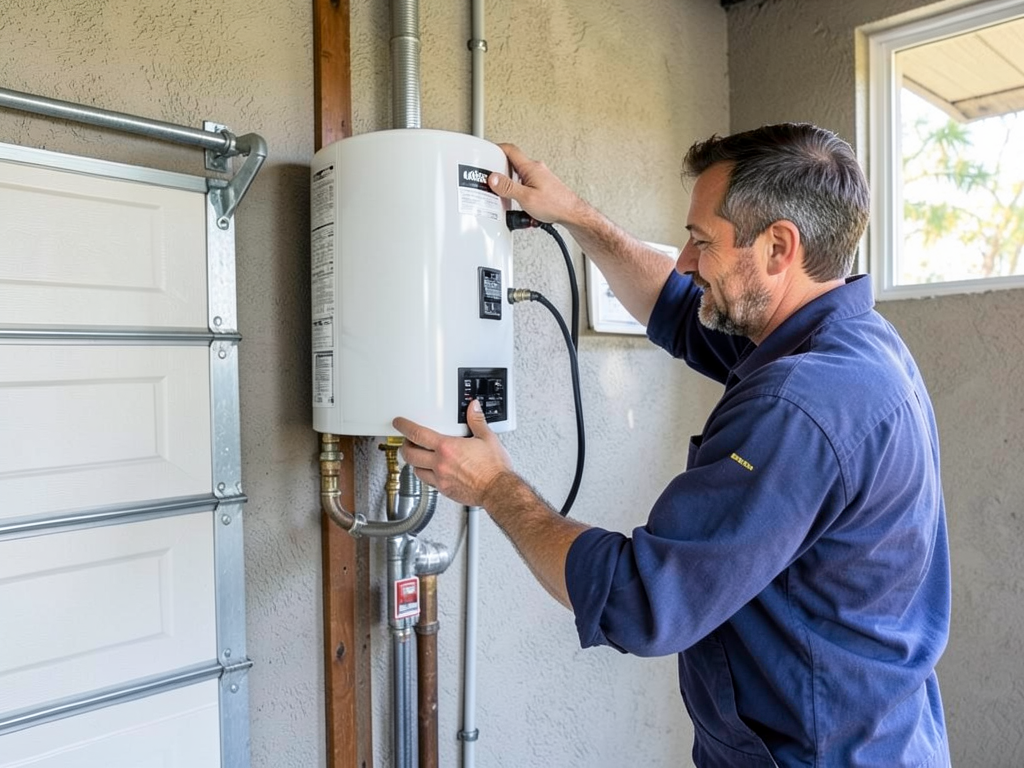
Space savings represent another major benefit for Orangecrest homeowners. Traditional tanks occupy 5-6 square feet of valuable garage floor space. Tankless units mount on walls and free up that space for storage, workbenches, or even additional parking.
The climate in Riverside County also favors tankless technology. With summer temperatures regularly exceeding 100 degrees, the cold water entering homes stays relatively warm year-round. This reduces the energy needed to heat water, improving tankless efficiency by 10-15% compared to installations in colder climates.
Riverside-Specific Installation Requirements You Must Know
Installing a tankless water heater in Orangecrest requires navigating specific local requirements. The City of Riverside Building & Safety department mandates permits for all water heater replacements, whether tank or tankless.
California Plumbing Code Section 505.0 requires proper seismic bracing for all water heaters. For tankless units, this means specific mounting hardware rated for the unit’s weight when filled with water. The code also mandates proper venting materials – Category III stainless steel vent pipe for most gas-fired units.
Gas line sizing presents another critical consideration. Tankless units typically require 3/4-inch gas lines versus the 1/2-inch lines common in older Orangecrest homes. This means many installations require gas line upgrades to ensure adequate fuel delivery for the high-efficiency burners.
Electrical requirements also increase with tankless systems. Most units need a dedicated 120-volt circuit for controls and ignition, while some high-capacity models require 240-volt circuits for freeze protection in garage installations.
Venting options vary based on home configuration. Direct-vent systems can exit through side walls, while power-vent units offer more flexibility in routing. The choice affects both installation cost and system performance in Orangecrest’s occasional Santa Ana wind conditions.
Hard Water Solutions for Orangecrest Tankless Systems
Riverside’s hard water creates unique challenges for tankless water heaters. The 92508 area experiences mineral content that can reduce heat exchanger efficiency by 30% within just two years without proper protection.
Scale buildup inside heat exchangers acts like insulation, forcing the unit to work harder and reducing hot water output. This is why professional installation in Orangecrest always includes scale prevention strategies.
Water softeners represent the most comprehensive solution. These systems remove calcium and magnesium before water enters the tankless unit, extending heat exchanger life to 15-20 years instead of the 5-7 years typical without treatment.
For homeowners who prefer not to install whole-house softeners, inline scale inhibitors offer an alternative. These cartridge-based systems use polyphosphates to keep minerals suspended in water rather than allowing them to precipitate on heat exchanger surfaces.
Regular maintenance becomes critical in hard water areas. Professional descaling every 12-18 months removes any accumulated mineral deposits. The process involves circulating a food-grade acid solution through the heat exchanger to dissolve scale without damaging the unit.
Some tankless models feature scale detection technology that monitors heat exchanger performance and alerts homeowners when cleaning is needed. This proactive approach prevents efficiency losses before they impact utility bills or hot water availability.
Comparing Top Tankless Brands for Riverside Homes
Not all tankless water heaters perform equally in Riverside’s conditions. Understanding the differences helps Orangecrest homeowners make informed decisions about their upgrades.
Navien units lead the market for energy efficiency, with some models achieving up to 0.96 Uniform Energy Factor. Their advanced burner technology handles Riverside’s varying water temperatures effectively, maintaining consistent output even when incoming water fluctuates during summer heat waves.
Rinnai offers exceptional reliability with features specifically designed for hard water areas. Their scale detection system monitors heat exchanger performance and provides maintenance alerts before efficiency drops significantly. Many Orangecrest contractors recommend Rinnai for their proven track record in Southern California.
Rheem tankless units provide excellent value with solid performance in moderate-demand applications. Their compact design works particularly well in the tight spaces common in Orangecrest garage configurations. The brand’s nationwide service network ensures parts availability for warranty repairs.
Noritz specializes in high-capacity commercial applications but also offers residential models perfect for large Orangecrest homes. Their ability to cascade multiple units for increased capacity makes them ideal for properties with multiple bathrooms or luxury features like hot tubs.
When comparing brands, consider factors beyond initial cost. Warranty terms vary significantly – some manufacturers offer 15-year heat exchanger warranties while others limit coverage to 10 years. This difference matters in Riverside’s hard water conditions where heat exchanger longevity directly impacts total ownership cost.
Cost-Benefit Analysis for Orangecrest Homeowners
Understanding the financial implications helps Orangecrest families decide if tankless conversion makes sense for their specific situation. The analysis goes beyond simple payback calculations to consider lifestyle improvements and property value impacts.
Initial installation costs range from $3,500 to $6,500 depending on the unit size, necessary gas line upgrades, and venting requirements. While this exceeds traditional tank replacement costs of $1,500 to $2,500, the long-term benefits often justify the premium.
Energy savings typically range from 25% to 35% compared to traditional tanks. For a family using 80-100 gallons of hot water daily, this translates to $25-35 monthly utility savings. In Riverside’s high electricity rate environment, these savings accumulate faster than in many other regions.
Rebates significantly reduce net costs. Riverside Public Utilities offers $300-500 rebates for qualifying high-efficiency units, while SoCalGas provides additional incentives up to $250. These programs can reduce installation costs by 15-20%.
Maintenance represents an ongoing consideration. Annual professional service costs $150-250, while DIY maintenance requires about 30 minutes quarterly for filter cleaning. Traditional tanks need similar maintenance, so this cost difference is minimal.
Property value impacts are harder to quantify but potentially significant. Energy-efficient upgrades appeal to today’s buyers, and the space savings in garages can be marketed as additional storage or parking space – both valuable features in Orangecrest’s family-oriented market.
Professional vs. DIY Installation: Critical Differences
Attempting DIY tankless installation in Orangecrest often leads to problems that cost more to fix than professional installation would have cost initially. Understanding these differences helps homeowners make safe choices.
Gas line sizing represents the most dangerous DIY mistake. Undersized gas lines cause units to malfunction, potentially producing carbon monoxide or causing incomplete combustion. Professional installers calculate exact gas requirements based on the unit’s BTU rating and local gas pressure.
Venting errors can create serious safety hazards. Improper vent materials or incorrect termination locations may allow carbon monoxide to enter living spaces. California code requires specific vent materials and clearances that vary by installation location and unit type.
Warranty implications often surprise DIY installers. Most manufacturers void warranties if installations aren’t performed by licensed professionals. Given that tankless units cost $1,000-2,500 for the equipment alone, losing warranty protection represents a significant financial risk.
Permit requirements in Riverside County mandate professional oversight for gas appliance installations. Unpermitted work can result in fines, insurance complications, and difficulties selling the home. The permit process ensures installations meet all safety codes.
Professional installers bring diagnostic tools that DIYers lack. Combustion analyzers verify proper burner operation, while manometers measure gas pressure to ensure optimal performance. These tools help installers fine-tune systems for maximum efficiency and safety.
Time considerations also favor professional installation. What might take a DIYer three weekends often takes professionals one day, including all necessary testing and cleanup. This minimizes household disruption and ensures the system operates correctly from day one.
Orangecrest Success Stories: Real Customer Experiences
Orangecrest families are discovering how tankless technology transforms their daily lives. These real experiences highlight benefits that go beyond simple energy savings.
The Martinez family on Amalfi Drive converted their 1998 home’s tank heater to tankless last summer. With three teenagers and both parents working from home, they struggled with hot water shortages daily. Their Navien unit now provides unlimited hot water, and their August utility bill dropped by 28% compared to the previous year.
On Sunrise Drive, the Chen household prioritized garage space. Their traditional 50-gallon tank occupied valuable floor area needed for their home gym equipment. The wall-mounted tankless unit freed up 6 square feet, allowing them to expand their workout area without remodeling.
The Wilson family in the Orangecrest community near Tuscany Heights installed a high-capacity Rinnai unit to support their vacation rental business. The system handles back-to-back guest showers while maintaining temperature for the pool heater. They report zero complaints about hot water since installation.
A local Orangecrest elementary school teacher on Peach Tree Drive chose a Rheem unit for its reliability and local service availability. Living in a 2,200-square-foot home built in 2003, she needed a system that would work seamlessly with her existing plumbing while providing energy savings on her teacher’s salary.
These Orangecrest installations demonstrate how different families prioritize various benefits – from utility savings to space optimization to supporting home businesses. The common thread is satisfaction with the decision to upgrade to tankless technology.
Maintenance Requirements for Long-Term Performance
Proper maintenance ensures tankless water heaters deliver their promised performance and longevity in Orangecrest’s conditions. Understanding these requirements helps homeowners protect their investment.
Monthly filter cleaning prevents debris from entering the heat exchanger. Most units have inlet filters that catch sediment and scale particles. Cleaning takes about 10 minutes using just water and a soft brush – no special tools required.
Quarterly system flushing removes accumulated scale in hard water areas. This process uses white vinegar or a commercial descaling solution circulated through the heat exchanger for 45-60 minutes. Many homeowners perform this maintenance themselves, though professional service ensures thorough cleaning.
Annual professional inspection checks critical safety components. Technicians verify gas pressure, test the pressure relief valve, inspect venting for obstructions, and check for any error codes stored in the unit’s memory. This inspection catches potential issues before they cause system failures.
Water quality monitoring helps optimize maintenance schedules. Homes with particularly hard water may need more frequent descaling, while those with water softeners can extend service intervals. Testing water hardness every six months helps adjust maintenance timing.
Temperature settings affect both performance and scale formation. Setting units to 120 degrees Fahrenheit instead of the maximum 140 degrees reduces scale buildup while still providing comfortable hot water. This simple adjustment can extend time between professional cleanings by 50%.
Air intake and exhaust vents require seasonal inspection. Orangecrest’s occasional dust storms and pollen seasons can clog vent screens, reducing efficiency. Checking and cleaning these vents takes just minutes but prevents performance issues.
Environmental Benefits Beyond Energy Savings
Tankless water heaters offer environmental advantages that appeal to Orangecrest’s environmentally conscious residents. These benefits extend beyond simple energy consumption reductions.
Reduced water waste represents a significant environmental benefit. Traditional tanks waste water while waiting for hot water to reach fixtures – often 1-2 gallons per use. Tankless systems with recirculation pumps can reduce this waste to near zero, saving thousands of gallons annually.
Longer equipment lifespan means fewer water heaters in landfills. Traditional tanks typically last 8-12 years, while properly maintained tankless units often exceed 20 years. This longevity reduces manufacturing impacts and waste generation over time.
Recyclable components make end-of-life disposal more environmentally friendly. Most tankless units contain significant amounts of copper and aluminum that recycling facilities can process. The compact size also means less landfill space if recycling isn’t available.
Reduced standby heat loss eliminates the continuous energy waste associated with keeping 40-50 gallons of water hot 24/7. This reduction in energy consumption directly decreases the carbon footprint of water heating.
Point-of-use installation options allow for even greater efficiency in large homes. Installing smaller units near high-demand areas eliminates the energy losses from long pipe runs, further reducing environmental impact.
Water conservation becomes increasingly important in Southern California’s drought-prone climate. Tankless systems support water-saving fixtures and practices by providing hot water exactly when needed, encouraging shorter wait times and reduced overall consumption.
Frequently Asked Questions
How long does a tankless water heater installation take in Orangecrest?
Most professional installations in Orangecrest homes take 6-8 hours for a straightforward replacement. Complex installations requiring gas line upgrades or new venting may take 1-2 days. Your installer will provide a specific timeline after evaluating your home’s configuration.
Can my existing gas line handle a tankless water heater?
Many Orangecrest homes built before 2010 need gas line upgrades for tankless installation. These units typically require 3/4-inch gas lines versus the 1/2-inch lines common in older homes. A professional assessment will determine if your existing line meets the BTU requirements.
What maintenance do tankless water heaters need in hard water areas?
In Riverside’s hard water conditions, tankless units need annual professional descaling and quarterly filter cleaning. Homes without water softeners may need descaling every 6-8 months. Regular maintenance prevents scale buildup that reduces efficiency and can void warranties.
Are tankless water heaters worth the higher upfront cost?
For most Orangecrest homeowners, yes. While initial costs run $2,000-4,000 higher than traditional tanks, energy savings of 25-35% plus available rebates often provide payback in 3-5 years. The longer lifespan and space savings add additional value beyond simple energy calculations.
Do tankless water heaters work during power outages?
Standard tankless units require electricity for ignition and controls, so they won’t work during outages. However, some models offer battery backup options that maintain basic operation for several hours. Gas control valves in most units close automatically if power is lost for safety.
How do I know what size tankless unit I need?
Unit sizing depends on your home’s simultaneous hot water demand measured in gallons per minute (GPM). A professional assessment considers the number of bathrooms, appliances, and typical usage patterns. Most Orangecrest homes need 8-10 GPM units, though larger homes may require higher capacity or multiple units.
Take the Next Step Toward Endless Hot Water
Orangecrest homeowners deserve reliable hot water without the limitations of traditional tank heaters. With energy costs rising and water quality challenges unique to Riverside County, now is the perfect time to explore tankless technology.
Professional installation ensures your system meets all local codes while maximizing efficiency and safety. From proper gas line sizing to appropriate venting and scale prevention, every detail matters for long-term performance.
Don’t wait until your current water heater fails. Proactive replacement with a properly sized tankless unit prevents emergency situations and begins saving money immediately. The available rebates from Riverside Public Utilities and SoCalGas make this the most affordable time to upgrade.
Call (951) 309-5599 today to schedule your free consultation. Our Orangecrest specialists will assess your home’s specific needs, explain your options, and provide a detailed quote with no obligation. Experience the difference that professional tankless installation makes for your family’s comfort and utility costs.
Pick up the phone and call (951) 309-5599 before the next cold shower reminds you why Orangecrest homeowners are making the switch to tankless water heaters this year.
{
“@context”: “https://schema.org”,
“@type”: “BlogPosting”,
“headline”: “Why homeowners in Orangecrest are upgrading to tankless water heaters this year”,
“description”: “Discover why Orangecrest homeowners are switching to tankless water heaters in 2026. Learn about local rebates, hard water solutions, and professional installation from Riverside experts.”,
“wordCount”: 2749,
“datePublished”: “2026-02-17T14:04:00.000Z”,
“dateModified”: “2026-02-17T14:04:00.000Z”,
“inLanguage”: “en-US”,
“mainEntityOfPage”: {
“@type”: “WebPage”,
“@id”: “https://evergreenplumbingriverside.com”
},
“publisher”: {
“@type”: “LocalBusiness”,
“name”: “Evergreen Plumbing Riverside”,
“url”: “https://evergreenplumbingriverside.com”
},
“author”: {
“@type”: “Organization”,
“name”: “Evergreen Plumbing Riverside”,
“url”: “https://evergreenplumbingriverside.com”
},
“image”: {
“@type”: “ImageObject”,
“url”: “https://evergreenplumbingriverside.com/wp-content/uploads/2026/03/why-homeowners-in-orangecrest-are-upgrading-to-tan-1.png”
}
}
{
“@context”: “https://schema.org”,
“@type”: “Plumber”,
“name”: “Evergreen Plumbing Riverside”,
“url”: “https://evergreenplumbingriverside.com”,
“address”: {
“@type”: “PostalAddress”,
“addressLocality”: “Riverside”
},
“areaServed”: {
“@type”: “City”,
“name”: “Riverside”
}
}
{
“@context”: “https://schema.org”,
“@type”: “FAQPage”,
“mainEntity”: [
{
“@type”: “Question”,
“name”: “How long does a tankless water heater installation take in Orangecrest?”,
“acceptedAnswer”: {
“@type”: “Answer”,
“text”: “Most professional installations in Orangecrest homes take 6-8 hours for a straightforward replacement. Complex installations requiring gas line upgrades or new venting may take 1-2 days. Your installer will provide a specific timeline after evaluating your home’s configuration.”
}
},
{
“@type”: “Question”,
“name”: “Can my existing gas line handle a tankless water heater?”,
“acceptedAnswer”: {
“@type”: “Answer”,
“text”: “Many Orangecrest homes built before 2010 need gas line upgrades for tankless installation. These units typically require 3/4-inch gas lines versus the 1/2-inch lines common in older homes. A professional assessment will determine if your existing line meets the BTU requirements.”
}
},
{
“@type”: “Question”,
“name”: “What maintenance do tankless water heaters need in hard water areas?”,
“acceptedAnswer”: {
“@type”: “Answer”,
“text”: “In Riverside’s hard water conditions, tankless units need annual professional descaling and quarterly filter cleaning. Homes without water softeners may need descaling every 6-8 months. Regular maintenance prevents scale buildup that reduces efficiency and can void warranties.”
}
},
{
“@type”: “Question”,
“name”: “Are tankless water heaters worth the higher upfront cost?”,
“acceptedAnswer”: {
“@type”: “Answer”,
“text”: “For most Orangecrest homeowners, yes. While initial costs run $2,000-4,000 higher than traditional tanks, energy savings of 25-35% plus available rebates often provide payback in 3-5 years. The longer lifespan and space savings add additional value beyond simple energy calculations.”
}
},
{
“@type”: “Question”,
“name”: “Do tankless water heaters work during power outages?”,
“acceptedAnswer”: {
“@type”: “Answer”,
“text”: “Standard tankless units require electricity for ignition and controls, so they won’t work during outages. However, some models offer battery backup options that maintain basic operation for several hours. Gas control valves in most units close automatically if power is lost for safety.”
}
},
{
“@type”: “Question”,
“name”: “How do I know what size tankless unit I need?”,
“acceptedAnswer”: {
“@type”: “Answer”,
“text”: “Unit sizing depends on your home’s simultaneous hot water demand measured in gallons per minute (GPM). A professional assessment considers the number of bathrooms, appliances, and typical usage patterns. Most Orangecrest homes need 8-10 GPM units, though larger homes may require higher capacity or multiple units.”
}
}
]
}
{
“@context”: “https://schema.org”,
“@type”: “BreadcrumbList”,
“itemListElement”: [
{
“@type”: “ListItem”,
“position”: 1,
“name”: “Home”,
“item”: “https://evergreenplumbingriverside.com”
},
{
“@type”: “ListItem”,
“position”: 2,
“name”: “Blog”,
“item”: “https://evergreenplumbingriverside.com/blog”
},
{
“@type”: “ListItem”,
“position”: 3,
“name”: “Why homeowners in Orangecrest are upgrading to tankless water heaters this year”
}
]
}
{
“@context”: “https://schema.org”,
“@type”: “Service”,
“serviceType”: “Plumbing”,
“provider”: {
“@type”: “LocalBusiness”,
“name”: “Evergreen Plumbing Riverside”,
“url”: “https://evergreenplumbingriverside.com”
},
“areaServed”: {
“@type”: “City”,
“name”: “Riverside”
},
“description”: “Discover why Orangecrest homeowners are switching to tankless water heaters in 2026. Learn about local rebates, hard water solutions, and professional installation from Riverside experts.”
}