





menu

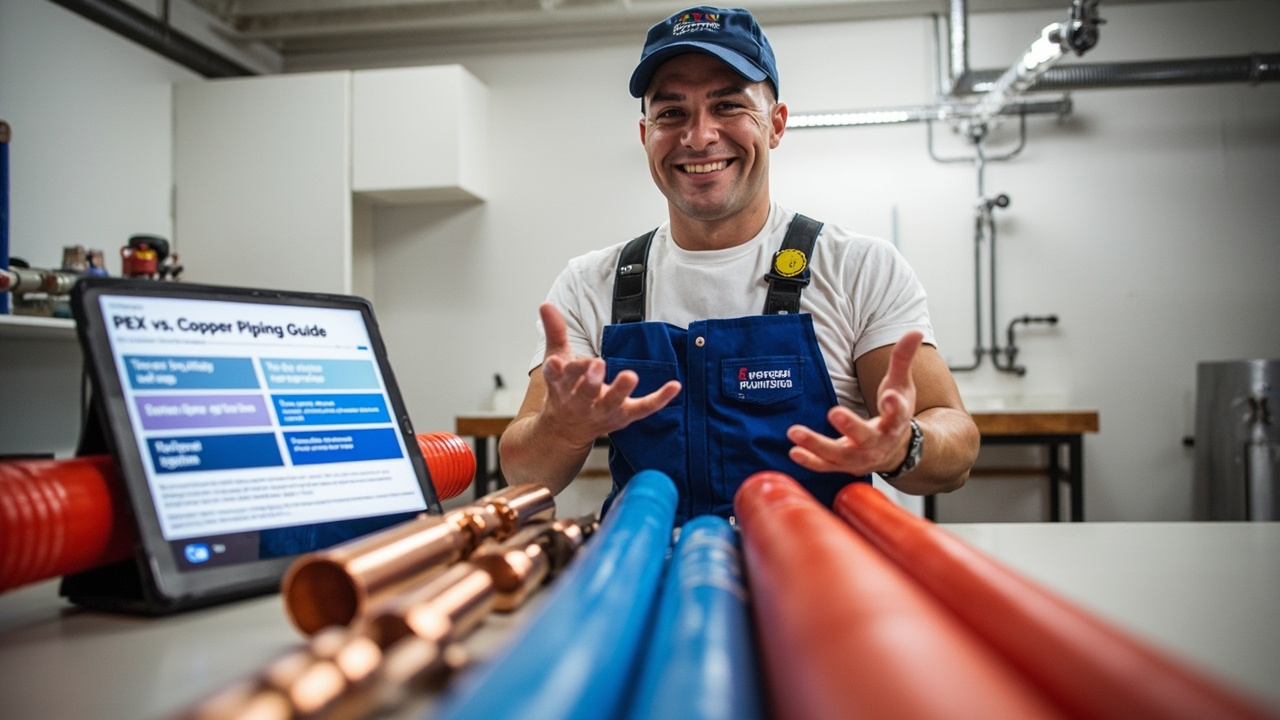
PEX vs. Copper Piping Guide in Riverside – Make the Right Choice for Your Home's Plumbing System

Understand the real differences between cross-linked polyethylene and copper tubing so you can choose the right material for Riverside's unique water conditions, seismic requirements, and long-term performance needs.

Slider Image 1
Slider Image 2
Slider Image 3
Slider Image 4
Slider Image 5
Slider Image 7
Slider Image 8
Slider Image 9
Slider Image 10
Slider Image 11

Why Your Piping Material Decision Matters More in Riverside

You stand in your crawlspace staring at corroded pipes, or you face a replumb quote with two material options. The difference between PEX and copper pipes is not just about cost. In Riverside, your choice affects how your system handles hard water, seismic movement, and temperature swings between summer heat and winter cold.

Riverside's water supply carries moderate to high mineral content. Copper tubing can develop pinhole leaks over time as minerals interact with the metal, particularly in areas with acidic water chemistry. Cross-linked polyethylene resists corrosion completely but requires proper installation techniques to avoid expansion issues during hot water flow.

The PEX vs copper comparison gets complicated when you factor in California's seismic codes. Copper piping is rigid and requires careful bracketing to prevent stress fractures during ground movement. PEX offers flexibility that absorbs lateral motion, but you need expansion loops and proper support spacing to prevent sagging.

The copper vs PEX plumbing pros and cons shift based on application. Copper provides a proven track record spanning decades and works well for exposed installations where UV exposure is minimal. PEX piping vs copper plumbing comes down to installation environment, water chemistry, budget constraints, and how long you plan to own the property. Each material solves specific problems, and each creates different maintenance requirements over a 20-year timeline.

Understanding the real performance differences helps you avoid expensive mistakes and choose the system that matches your home's specific conditions.

Why Your Piping Material Decision Matters More in Riverside
How Each Material Performs in Real-World Conditions

How Each Material Performs in Real-World Conditions

Copper tubing offers superior heat tolerance and works for both water distribution and gas lines. Type L copper, the standard for residential plumbing, handles pressure up to 150 PSI and tolerates temperatures exceeding 200 degrees Fahrenheit. The material does not degrade from UV exposure, making it suitable for outdoor applications when properly protected from physical damage.

The rigidity of copper requires more fittings for directional changes. Each joint represents a potential leak point and adds labor time. Soldered connections create permanent, reliable joints when executed properly, but poor technique leads to weak spots that fail under pressure cycling.

Cross-linked polyethylene comes in three types. PEX-A offers the highest flexibility and can be expanded using specialized tools, creating connections without mechanical fittings. PEX-B costs less but requires more careful handling during cold weather installation. PEX-C is the most affordable but the least flexible.

The continuous run capability of PEX reduces joint count dramatically. You can route a single line from the manifold to the fixture with no intermediate connections hidden in walls. This approach, called home-run plumbing, minimizes leak risk and allows individual fixture shutoff at the central manifold.

PEX cannot tolerate direct sunlight. UV radiation breaks down the polymer structure within months, causing brittleness and failure. You cannot use PEX for exterior hose bibs or any application with sun exposure unless protected inside conduit.

Both materials expand and contract with temperature changes, but PEX movement is more pronounced. Proper installation includes accounting for this expansion to prevent stress on fittings and support brackets.

How to Evaluate Which Material Fits Your Project

PEX vs. Copper Piping Guide in Riverside – Make the Right Choice for Your Home's Plumbing System
01

Assess Your Water Quality

Request a water quality report from your local utility or conduct independent testing. Look at pH levels, total dissolved solids, and mineral content. Acidic water below 6.5 pH accelerates copper corrosion. High chlorine levels can affect PEX over extended periods. Water chemistry determines which material will last longer in your specific supply conditions. This analysis prevents choosing a material that your water will degrade prematurely.
02

Map Your Installation Environment

Document where pipes will run. Identify attic spaces with extreme heat, crawlspaces with potential freezing, and any areas with UV exposure. Consider accessibility for future repairs. Copper works better for visible installations where aesthetics matter. PEX excels in concealed runs with multiple directional changes. Your building layout and access constraints often determine which material installs more efficiently and reliably in your specific structure.
03

Calculate Total System Cost

Compare material costs plus installation labor. PEX material costs less, but specialized tools increase upfront investment for small jobs. Copper costs more per foot, but skilled technicians can install it faster on simple layouts. Factor in how many fittings each approach requires. Include long-term maintenance probability based on your water quality and installation environment. The cheapest initial material rarely equals the lowest total cost over the system's lifespan.

Why Riverside Homes Need Location-Specific Piping Expertise

Evergreen Plumbing Riverside understands how local conditions affect piping performance. We see how homes in the Canyon Crest area experience different water pressure than properties near the Santa Ana River. We know which neighborhoods have aggressive water chemistry that shortens copper lifespan.

Riverside building codes require specific installation techniques for seismic safety. Copper installations need proper bracketing intervals and expansion loops. PEX systems require correct support spacing and protection from physical damage. Inspectors in this jurisdiction look for specific compliance markers that vary from other California cities.

We factor in Riverside's temperature extremes when designing systems. Summer attic temperatures exceed 140 degrees, affecting pipe expansion rates. Winter nights occasionally drop to freezing, requiring proper insulation techniques for both copper and PEX in vulnerable locations.

The homes in Riverside range from historic Craftsman structures to modern developments. Each architectural style presents different installation challenges. Older homes with limited crawlspace access benefit from PEX's flexibility. Newer construction with open framing allows efficient copper installation. We match the material to the building's specific constraints.

Your water source matters. Some Riverside properties use well water with different chemistry than municipal supply. We test and analyze before recommending materials. We have installed both systems throughout Riverside's established neighborhoods and understand which material performs better in each microclimate and soil condition.

Local expertise prevents the cookie-cutter approach that leads to premature failures and expensive replacements.

What You Need to Know Before Choosing Your Piping Material

Installation Timeline and Disruption

Copper installation typically takes longer due to the soldering process and fitting requirements. Each joint needs proper flux application, heating, and cooling time. PEX installation moves faster because connections require simple crimping or expansion. A whole-house replumb with PEX often completes one to two days faster than copper. Access to work areas affects timeline more than material choice. Homes requiring extensive drywall removal add time regardless of material. Realistic scheduling accounts for your specific layout and accessibility constraints.

Material Longevity and Warranty Considerations

Copper tubing lasts 50 years or more in neutral water conditions but can fail in 15 years with aggressive chemistry. PEX manufacturers provide 25-year warranties, but real-world installations show excellent performance beyond 30 years when installed correctly. The warranty matters less than proper installation technique and water compatibility. Both materials fail prematurely when installed incorrectly. Copper fails at poorly soldered joints. PEX fails when kinked, over-tightened at fittings, or exposed to UV. Choose based on installation quality, not marketing claims.

Code Compliance and Inspection Requirements

California plumbing code permits both materials for potable water distribution. Inspectors verify proper support spacing, correct fitting types, and appropriate applications. Copper requires specific flux types and solder composition. PEX requires approved expansion tools or crimp rings meeting ASTM standards. Some jurisdictions restrict PEX in certain applications or require specific types. Riverside inspectors check for proper labeling, correct pressure ratings, and seismic bracing. Permits are required for repipe projects. Non-compliant installations create liability and resale complications.

Repair and Modification Flexibility

Copper repairs require cutting, fitting, and soldering. Any technician with basic skills can repair copper using readily available materials. PEX repairs need specific tools and fittings but complete faster once you have equipment. Adding fixtures to copper systems means cutting into existing lines and adding tees. PEX manifold systems allow adding circuits without disturbing existing lines. Future modification ease depends on how the original system was designed. Home-run PEX systems offer superior flexibility. Trunk-and-branch copper allows easier partial replacements. Consider how you might modify the system over your ownership period.

Frequently Asked Questions

You Have Questions,
We Have Answers

Do plumbers prefer PEX or copper? +

Most plumbers in Riverside now prefer PEX for repiping jobs. PEX installs faster, requires fewer fittings, and resists corrosion in our hard water conditions. You can snake it through walls without tearing out drywall, which saves you money on labor and repairs. Copper still has its place for exposed applications and certain code requirements, but PEX offers flexibility that matters in older Riverside homes with tight crawl spaces and slab foundations. The material choice depends on your specific project, budget, and building requirements.

Why don't insurance companies like PEX plumbing? +

This is a myth. Most insurance companies in California accept PEX plumbing when installed to code. Confusion stems from early PEX formulations that had issues decades ago. Modern PEX-A, PEX-B, and PEX-C meet strict ASTM standards and carry the same coverage as copper. Your Riverside homeowners policy cares about proper installation and code compliance, not the pipe material. If an adjuster questions PEX, it's typically an outdated policy or misunderstanding. Always verify your specific policy, but properly installed PEX should not affect your coverage or premiums.

What are the downsides of PEX pipe? +

PEX cannot handle direct sunlight exposure. UV rays degrade the material within months, so you cannot use it for outdoor hose bibs or exposed exterior runs in Riverside. Rodents can chew through PEX more easily than copper. You cannot use PEX directly off your water heater without a short copper or CPVC adapter due to temperature limits. PEX also requires special tools and fittings. While cheaper than copper upfront, those crimping tools and expansion fittings add cost. Some homeowners dislike that you cannot solder repairs like copper.

Why do plumbers not use copper anymore? +

Plumbers still use copper, but less often due to cost and labor. Copper prices fluctuate wildly, and installation requires torch work, more fittings, and longer labor hours. In Riverside's hard water, copper develops pinhole leaks over time from mineral deposits and pH imbalances. PEX eliminates soldering fire hazards in occupied homes and tight attic spaces. Copper remains the choice for gas lines, exposed decorative piping, and certain commercial applications. The shift reflects economics and efficiency, not copper's quality as a durable pipe material.

What is the life expectancy of PEX pipes vs copper pipes? +

Copper pipes last 50 to 70 years when water chemistry cooperates. Riverside's hard water can shorten that lifespan due to corrosion and mineral buildup. PEX manufacturers claim 50-plus years, but the material has only existed since the 1980s, so real-world data is still developing. PEX resists corrosion and scale buildup better than copper in aggressive water conditions. Both materials will outlast your mortgage when installed correctly. Your actual lifespan depends on water quality, installation quality, and pressure conditions specific to your Riverside neighborhood.

What is the lawsuit against PEX pipe? +

Class-action lawsuits targeted specific PEX brands for defective fittings that caused leaks and water damage. These cases focused on manufacturing defects in brass fittings and early formulations that cracked under stress, not the PEX material itself. Affected brands included Kitec, Poly-B, and certain Quest formulations. Modern PEX-A and PEX-B systems from reputable manufacturers have resolved these issues. If your Riverside home has older PEX from 1995 to 2007, verify the brand. Current PEX products meet stricter quality standards and carry comprehensive warranties.

Why do plumbers not like PEX? +

Some old-school plumbers resist PEX due to unfamiliarity or preference for traditional methods. Early PEX had legitimate problems with fittings and formulations, creating skepticism. Others dislike the proprietary tools required or prefer the permanence of soldered copper joints. In Riverside, experienced plumbers recognize that PEX solves real problems like freeze resistance, corrosion in hard water, and faster installation in tight crawl spaces. Resistance usually comes from habit, not technical merit. A quality plumber uses the right material for your specific application, whether PEX, copper, or CPVC.

What is the best pipe for home plumbing? +

No single best pipe exists. Your Riverside home needs different materials for different applications. PEX works well for cold and hot water supply lines inside walls and under slabs. Copper excels for exposed runs, gas lines, and areas requiring fire resistance. CPVC offers a middle ground for tight budgets. Your water chemistry, building age, local code, and budget determine the right choice. Homes built before 1970 may have galvanized steel or cast iron that needs replacement. A qualified plumber evaluates your specific conditions before recommending materials.

Where should you not use PEX? +

Never use PEX outdoors or in direct sunlight. UV exposure destroys the material. Do not use PEX within the first 18 inches from your water heater due to temperature limits. Avoid PEX in areas with potential chemical exposure like garages with stored solvents. Do not run PEX through concrete without sleeving, as chemicals in concrete can degrade the pipe. In Riverside, do not use PEX for irrigation systems or exterior hose connections. Keep PEX inside conditioned spaces, protected from sun, extreme heat, and mechanical damage.

Why is PEX banned in NYC? +

New York City banned PEX until 2021 due to concerns about chemical leaching and fire safety in high-rise buildings. The city required extensive testing before approval. NYC's unique building codes and centralized hot water systems created specific concerns that did not apply to single-family homes. The ban was lifted after manufacturers proved PEX met strict safety standards. Riverside operates under California Plumbing Code, which has allowed PEX for decades. The NYC ban reflected local regulatory caution, not inherent material flaws relevant to California residential applications.

How Riverside's Hard Water and Seismic Activity Affect Your Piping Choice

Riverside's water hardness ranges from 180 to 250 parts per million in most areas, classified as hard to very hard. This mineral content creates scale buildup inside copper pipes that reduces flow over time and can lead to pinhole leaks as minerals interact with the copper surface. The electrical conductivity between dissimilar metals accelerates corrosion when copper connects to galvanized steel or brass fixtures. PEX eliminates this galvanic corrosion risk entirely. However, Riverside sits in a seismically active region where ground movement stresses rigid piping systems. PEX's flexibility absorbs lateral motion that can crack soldered copper joints, but both materials require proper seismic bracing per California code.

Evergreen Plumbing Riverside has installed and serviced both materials throughout the city's diverse neighborhoods for years. We understand which subdivisions experience higher water pressure that stresses PEX fittings and which areas have water chemistry that corrodes copper faster. Local building inspectors know our work meets California plumbing code requirements for both material types. We source materials from suppliers who stock products rated for California's specific climate and seismic requirements. Choosing a local team means you get recommendations based on actual performance data from your neighborhood, not generic advice from technicians unfamiliar with Riverside's unique conditions.
Plumbing Services in The Riverside Area

We are proud to serve the entire Riverside community and its surrounding areas. Our local presence ensures we can provide swift and efficient service when you need it most. You can view our service area on the map to see if we cover your location. We're dedicated to bringing professional plumbing solutions right to your doorstep.

Address:
Evergreen Plumbing Riverside, 3400 Central Ave, Riverside, CA, 92506

Additional Services We Offer

Our news updates

Latest Articles & News from The Blogs

Industrial plumbing essentials for warehouse managers in Jurupa Valley and Moreno Valley Warehouse operations in Jurupa Valley and Moreno Valley…

Industrial plumbing essentials for warehouse managers in Jurupa Valley and Moreno Valley

Industrial plumbing essentials for warehouse managers in Jurupa Valley and Moreno Valley Warehouse operations in Jurupa Valley and Moreno Valley…

Everything you need to consider before adding a pot filler to your Wood Streets kitchen remodel

Everything you need to consider before adding a pot filler to your Wood Streets kitchen remodel Adding a pot filler…

Why stainless steel sinks might be a better choice than cast iron for Northside kitchens

Why stainless steel sinks might be a better choice than cast iron for Northside kitchens Northside Riverside homeowners face unique…

Contact Us

Stop guessing about which material fits your home. Call Evergreen Plumbing Riverside at (951) 309-5599 for a detailed evaluation of your specific water conditions, building structure, and budget. We provide clear recommendations based on your situation, not sales pressure.