Using your water meter to check for hidden leaks in your Northside property
Finding a hidden water leak in your Northside Riverside home can save you hundreds of dollars on your water bill and prevent costly property damage. This guide walks you through the exact process of using your water meter to detect leaks, whether you have an older analog dial or a newer digital meter installed by Riverside Public Utilities. Riverside Public Utilities.
Water leaks waste thousands of gallons annually in Riverside homes, often going undetected for months. By learning to read your meter correctly, you can catch problems early and know when to call a professional plumber before minor issues become major repairs. How to find a local plumber in Mission Grove who actually answers the phone.
Locating your water meter in Northside Riverside
Your water meter sits in a concrete box near the street curb or sidewalk in front of your property. Look for a rectangular metal lid marked “WATER” or a plastic cover with the same labeling. In older Northside neighborhoods near University Avenue, these boxes often sit flush with the sidewalk and may be covered by grass or soil. Emergency Water Shut-Off Service.
Northside homes typically receive water from either Riverside Public Utilities or Western Municipal Water District depending on your exact location. Riverside Public Utilities meters often have newer digital displays, while WMWD properties might have traditional analog dials. Both types work for leak detection, but the reading process differs slightly. Western Municipal Water District.
Before testing, locate your main water shut-off valve, usually found where the water line enters your home near the front foundation. Knowing this location helps if you discover a major leak and need to stop water flow immediately.
Reading analog vs. digital water meters
Analog meters feature a circular dial with multiple hands and numbers, similar to an old-fashioned clock. The largest hand measures cubic feet, with each full rotation equaling 100 cubic feet or approximately 748 gallons. Smaller hands measure smaller increments for precise readings.
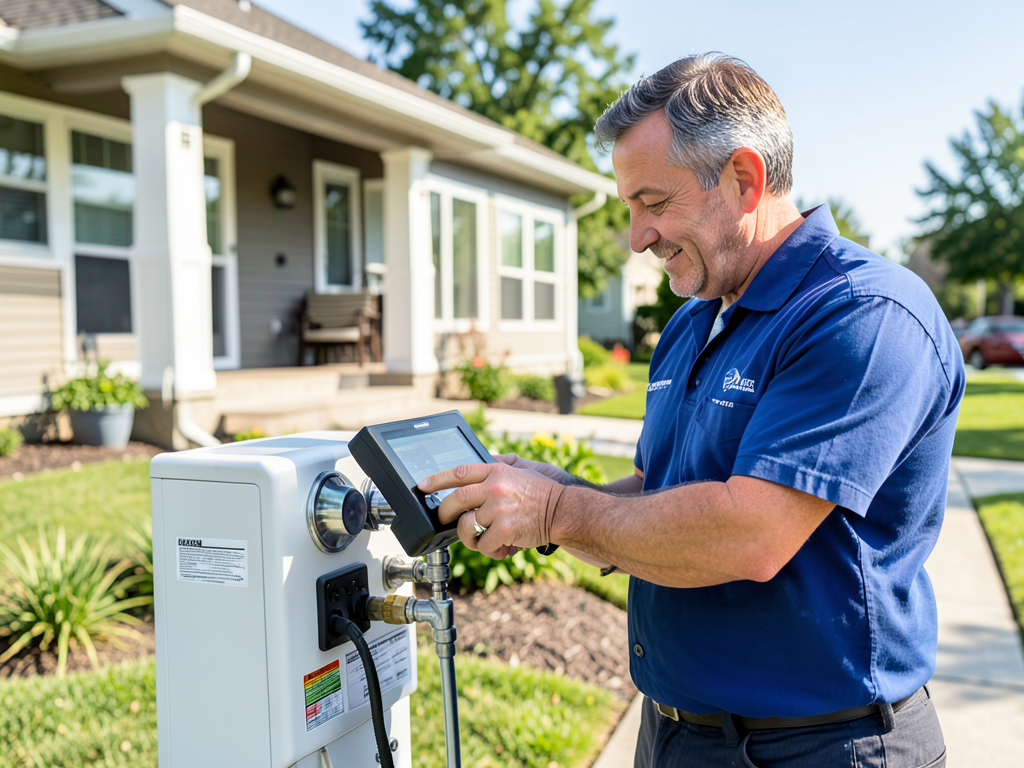
Digital meters display readings on an LCD screen that activates when you shine a flashlight on the solar cell. These newer meters often show both total consumption and a leak indicator. The display cycles through different screens, so you might need to wait a few seconds to see all information.
For both meter types, record the numbers shown. Analog meters read like odometers, with the last digit often being a stationary zero. Digital meters show exact figures without rounding. Write down the complete reading including all digits for accurate comparison later.
The 2-hour leak detection test
Turn off all water-using fixtures in your home, including toilets, faucets, washing machines, and irrigation systems. Don’t forget outdoor spigots and automatic ice makers. Check that your water heater isn’t running through a heating cycle.. Read more about Why your Riverwalk toilet ghost flushes in the middle of the night.
Record your initial meter reading, then wait exactly two hours without using any water. During this time, avoid flushing toilets, running dishwashers, or watering plants. Even small water uses can affect your results and make leak detection impossible.
After two hours, check the meter again. If the reading increased, you have a leak somewhere in your plumbing system. The amount of change tells you about the leak’s severity. A small increase might indicate a dripping faucet, while a large jump suggests a running toilet or pipe leak. The most common plumbing emergencies in La Sierra and how to solve them.
For analog meters, watch the leak indicator triangle or star-shaped wheel in the center. This small dial spins when water flows through the meter, even at very low rates. If it moves during your test, you have a leak even if the main numbers didn’t change noticeably.
Identifying the leak indicator on your meter
The leak indicator appears as a small triangular, star-shaped, or gear-like dial on analog meters. This component is extremely sensitive and detects water flow as low as one-tenth of a gallon per minute. When everything is off, this indicator should remain completely stationary.
On digital meters, the leak indicator might appear as a flashing light, moving numbers on a secondary display, or text message indicating water flow. Some newer smart meters send alerts to your phone if they detect continuous water usage patterns that suggest a leak.
Testing the leak indicator requires patience. Watch it for at least 30 seconds. Even tiny leaks from worn toilet flappers or pinhole pipe leaks will cause this dial to move slowly. If you see any movement when all water is supposedly off, you’ve confirmed a leak exists.. Read more about Dealing with pinhole copper pipe leaks in your Riverwalk townhouse.
Common leak sources in Northside Riverside homes
Toilets account for approximately 30% of household water use and are the most common leak source. A worn flapper valve can waste 200 gallons daily without obvious signs. Listen for hissing sounds near the toilet tank or put food coloring in the tank to check for leaks into the bowl.. Read more about Warning signs your Arlanza home has polybutylene pipes that are prone to bursting.
Irrigation system leaks often go unnoticed because they occur underground. Check for soggy spots in your yard, especially near sprinkler valve boxes or along main supply lines. Northside’s clay soil can hide these leaks for months, causing foundation damage before visible signs appear.
Slab leaks under concrete foundations are particularly problematic in older Northside homes built before 1980. These leaks occur when copper pipes corrode from the inside out, often due to Riverside’s hard water mineral content. Signs include warm spots on floors, the sound of running water when pipes are off, or unexpectedly high water bills.
Riverside utility specific considerations
Riverside Public Utilities provides water to most Northside properties and offers free leak detection kits through their customer service center. They also provide rebates for water-efficient fixtures and appliances, which can offset repair costs. Call (951) 826-5311 to request these resources.
Western Municipal Water District serves properties along the western edge of Northside. Their meters often include smart technology that tracks hourly usage patterns. WMWD customers can access detailed consumption data through their online portal, making leak detection even easier.
Both utilities bill in hundred cubic feet (CCF), where one CCF equals 748 gallons. Understanding this billing unit helps you calculate the cost of leaks. At current Riverside rates, a toilet leak wasting 200 gallons daily costs approximately $15-20 monthly.
Interpreting meter readings and calculating water loss
Water meters measure consumption in cubic feet, with one cubic foot equaling 7.48 gallons. To convert your meter reading to gallons, multiply the cubic feet by 7.48. This calculation helps you understand the actual volume of water lost to leaks.
For example, if your meter shows a 10 cubic foot increase during your two-hour test, that’s 74.8 gallons lost. Over 24 hours, this would equal 898 gallons, costing approximately $6-8 monthly at current rates. While not catastrophic, this waste adds up over time.
Track your readings over several days to establish baseline usage patterns. Most Northside households use 80-100 gallons per person daily for normal activities. Usage significantly above this range often indicates leaks or inefficient fixtures.
Emergency shut-off procedures
If your meter test reveals a major leak, knowing how to shut off your water supply quickly can prevent extensive damage. The main shut-off valve is typically located where the water line enters your home, often in a garage, utility room, or near the front foundation.
Turn the valve clockwise until it stops. If you have a gate valve (wheel-shaped handle), turn it several times until water stops flowing. For ball valves (lever handle), turn the lever 90 degrees until it’s perpendicular to the pipe.
After shutting off the main valve, check if the leak indicator stops moving. If it continues spinning, the leak may be in the water main between your house and the street meter. This requires immediate professional attention and possibly city utility involvement.
When to call a professional plumber
Call a plumber if your meter test confirms a leak but you cannot locate the source. Hidden leaks behind walls, under floors, or in underground pipes require specialized equipment to detect. Professional plumbers use acoustic listening devices, thermal imaging cameras, and moisture meters to pinpoint leak locations without destructive testing.
Contact a professional immediately if you notice water damage signs like stains, mold growth, or warped flooring. These indicate active leaks that could cause structural damage if left unrepaired. The longer you wait, the more expensive the repairs become.
Emergency situations requiring immediate service include water pouring from ceilings, burst pipes, or sewer backups. In these cases, turn off your main water supply and call (951) 309-5599 for 24/7 emergency plumbing service in Northside Riverside. Trenchless sewer repair options for historic homes in Victoria Park.
Preventing future leaks
Regular plumbing maintenance prevents many common leaks. Have your plumbing system inspected annually, especially if your Northside home is over 15 years old. Professional inspections can identify worn components before they fail and cause water damage.
Install water pressure regulators if your home’s pressure exceeds 80 PSI. High water pressure stresses pipes and fixtures, causing premature failure. Most Northside homes should maintain pressure between 50-70 PSI for optimal performance and longevity.
Consider upgrading old galvanized steel pipes common in pre-1970s Northside construction. These pipes corrode from the inside, causing reduced water pressure and eventual leaks. Modern PEX or copper replacements provide better performance and reliability.
Water conservation and leak repair benefits
Fixing leaks benefits both your wallet and the environment. A single dripping faucet can waste over 3,000 gallons annually, while a running toilet wastes 200 gallons daily. Combined, these common leaks could cost Northside residents thousands of dollars yearly.
Beyond financial savings, leak repair supports Riverside’s water conservation goals. The city faces ongoing drought conditions and imported water supply challenges. Every gallon saved through leak repair helps maintain adequate water reserves for the entire community.
Many Northside homeowners qualify for utility rebates when repairing leaks or upgrading to water-efficient fixtures. Check with Riverside Public Utilities or Western Municipal Water District for current incentive programs that can offset repair costs. Why homeowners in Orangecrest are upgrading to tankless water heaters this year.
Frequently Asked Questions
How often should I check my water meter for leaks?
Check your water meter quarterly or whenever you notice an unexpected increase in your water bill. Regular monitoring helps catch leaks early when repairs are less expensive and damage is minimal.
What if my meter is behind a locked gate or inside a fenced yard?
Utility workers have keys to access meters behind locked gates. If you cannot access your meter, contact Riverside Public Utilities at (951) 826-5311 to schedule a leak detection service or request a remote meter reading.
Can I get in trouble for turning off my water main?
You have the right to shut off water to your property for emergencies or repairs. However, turning off the water without cause or tampering with the city’s meter violates utility regulations and can result in fines.
Next steps for confirmed leaks
If your meter test confirms a leak, start by checking the most common sources: toilets, faucets, and irrigation systems. Many leaks are simple fixes you can handle yourself with basic tools and replacement parts from any hardware store.
For leaks you cannot find or fix, or if you discover water damage, call (951) 309-5599 immediately. Professional plumbers in Northside Riverside can locate hidden leaks using advanced detection equipment and provide guaranteed repairs with warranty protection.
Don’t let small leaks become big problems. A confirmed leak today could mean thousands in damage tomorrow. Take action now to protect your Northside home and your wallet.
Call (951) 309-5599 today to schedule your professional leak inspection. Our experienced technicians serve all of Northside Riverside with fast, reliable service and upfront pricing. Don’t wait until that small drip becomes a flood.
You may also find this helpful. How cluttered under-sink cabinets in Hawarden Hills lead to hidden plumbing leaks.
{
“@context”: “https://schema.org”,
“@type”: “BlogPosting”,
“headline”: “Using your water meter to check for hidden leaks in your Northside property”,
“description”: “Learn how to detect hidden leaks using your water meter with step-by-step instructions for Riverside residents. Save money and prevent damage.”,
“wordCount”: 1953,
“datePublished”: “2026-04-12T10:00:00.000Z”,
“dateModified”: “2026-04-12T10:00:00.000Z”,
“inLanguage”: “en-US”,
“mainEntityOfPage”: {
“@type”: “WebPage”,
“@id”: “https://evergreenplumbingriverside.com”
},
“publisher”: {
“@type”: “LocalBusiness”,
“name”: “Evergreen Plumbing Riverside”,
“url”: “https://evergreenplumbingriverside.com”
},
“author”: {
“@type”: “Organization”,
“name”: “Evergreen Plumbing Riverside”,
“url”: “https://evergreenplumbingriverside.com”
},
“image”: {
“@type”: “ImageObject”,
“url”: “https://evergreenplumbingriverside.com/wp-content/uploads/2026/03/using-your-water-meter-to-check-for-hidden-leaks-i-1.png”
}
}
{
“@context”: “https://schema.org”,
“@type”: “Plumber”,
“name”: “Evergreen Plumbing Riverside”,
“url”: “https://evergreenplumbingriverside.com”,
“address”: {
“@type”: “PostalAddress”,
“addressLocality”: “Riverside”
},
“areaServed”: {
“@type”: “City”,
“name”: “Riverside”
}
}
{
“@context”: “https://schema.org”,
“@type”: “FAQPage”,
“mainEntity”: [
{
“@type”: “Question”,
“name”: “How often should I check my water meter for leaks?”,
“acceptedAnswer”: {
“@type”: “Answer”,
“text”: “Check your water meter quarterly or whenever you notice an unexpected increase in your water bill. Regular monitoring helps catch leaks early when repairs are less expensive and damage is minimal.”
}
},
{
“@type”: “Question”,
“name”: “What if my meter is behind a locked gate or inside a fenced yard?”,
“acceptedAnswer”: {
“@type”: “Answer”,
“text”: “Utility workers have keys to access meters behind locked gates. If you cannot access your meter, contact Riverside Public Utilities at (951) 826-5311 to schedule a leak detection service or request a remote meter reading.”
}
},
{
“@type”: “Question”,
“name”: “Can I get in trouble for turning off my water main?”,
“acceptedAnswer”: {
“@type”: “Answer”,
“text”: “You have the right to shut off water to your property for emergencies or repairs. However, turning off the water without cause or tampering with the city’s meter violates utility regulations and can result in fines.”
}
}
]
}
{
“@context”: “https://schema.org”,
“@type”: “BreadcrumbList”,
“itemListElement”: [
{
“@type”: “ListItem”,
“position”: 1,
“name”: “Home”,
“item”: “https://evergreenplumbingriverside.com”
},
{
“@type”: “ListItem”,
“position”: 2,
“name”: “Blog”,
“item”: “https://evergreenplumbingriverside.com/blog”
},
{
“@type”: “ListItem”,
“position”: 3,
“name”: “Using your water meter to check for hidden leaks in your Northside property”
}
]
}
{
“@context”: “https://schema.org”,
“@type”: “Service”,
“serviceType”: “Plumbing”,
“provider”: {
“@type”: “LocalBusiness”,
“name”: “Evergreen Plumbing Riverside”,
“url”: “https://evergreenplumbingriverside.com”
},
“areaServed”: {
“@type”: “City”,
“name”: “Riverside”
},
“description”: “Learn how to detect hidden leaks using your water meter with step-by-step instructions for Riverside residents. Save money and prevent damage.”
}