How to choose the right size water heater for a large family in Orangecrest
Choosing the right water heater size for your Orangecrest home means the difference between endless hot showers and cold surprises. For large families, getting this calculation right prevents running out of hot water during peak morning hours while avoiding the energy waste of oversized units. Why homeowners in Orangecrest are upgrading to tankless water heaters this year.
Orangecrest’s newer developments in Riverside’s Eastside feature spacious homes with multiple bathrooms where hot water demand spikes dramatically. A family of five or more needs careful sizing based on actual usage patterns, not just household size. Riverside Public Utilities rebates.
Understanding Peak Hour Demand in Orangecrest Homes
Peak Hour Demand represents the maximum gallons of hot water your family uses during the busiest hour of the day. For a large family in Orangecrest, this typically occurs between 7-8 AM when multiple showers, dishwasher cycles, and morning routines overlap. Emergency Water Shut-Off Service.
Calculate your Peak Hour Demand by adding up simultaneous hot water uses:
- Shower: 2-3 gallons per minute
- Hand washing: 0.5-1.5 gallons per minute
- Dishwasher: 1.5-2.5 gallons per minute
- Clothes washer: 2-3 gallons per minute
A family of six in a typical Orangecrest home might use 60-80 gallons during peak hour. This calculation drives your sizing decision between tank and tankless options.
First Hour Rating vs Tankless Flow Rate
Traditional tank water heaters use First Hour Rating (FHR) to indicate how many gallons they can deliver in one hour starting with a full tank. Tankless units use Gallons Per Minute (GPM) to show continuous flow capacity.
For Orangecrest’s average groundwater temperature of 65-70°F, you’ll need units that can handle a 40-45°F temperature rise to reach comfortable shower temperatures. This affects both FHR and GPM calculations significantly.
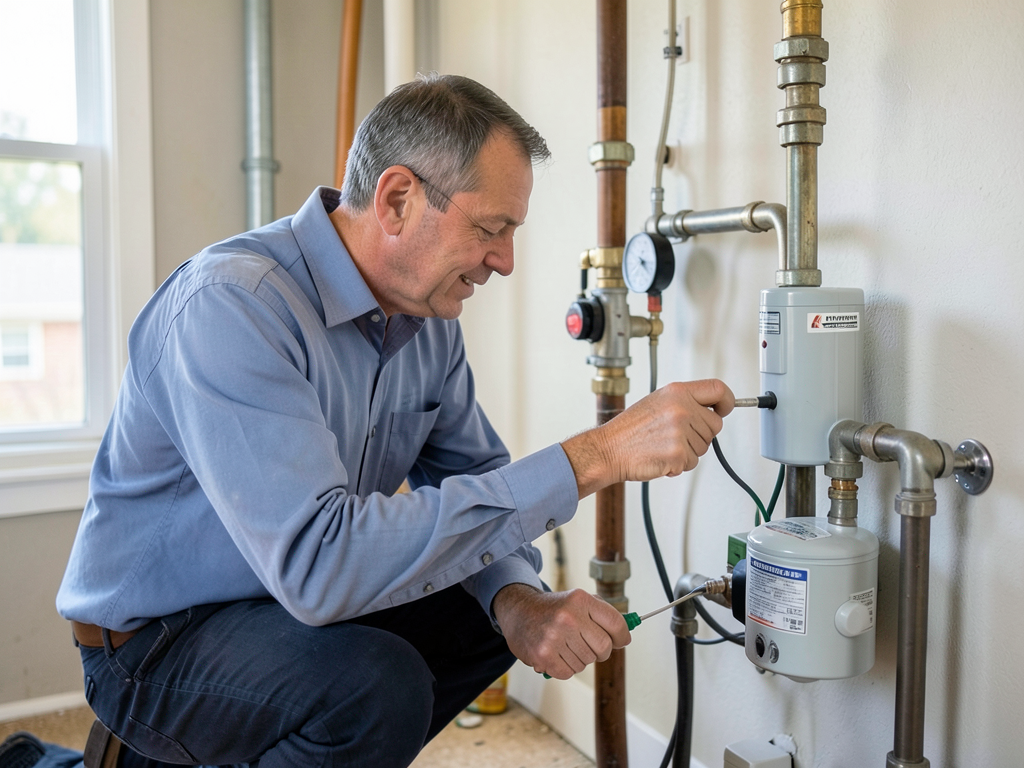
IMAGE 1 DESCRIPTION: Technical diagram comparing tank vs tankless water heater sizing calculations for Riverside’s groundwater temperature, showing FHR vs GPM requirements for a 6-person household. Plumbing Riverside.
Sizing Chart for Large Families in Orangecrest
Use this sizing guide based on household size and bathroom count typical in Orangecrest developments:
| Household Size | Bedrooms/Baths | Tank Size (Gallons) | Tankless GPM Needed |
|---|---|---|---|
| 4-5 people | 3/2 | 50-60 | 6-7 GPM |
| 5-6 people | 3/2.5 | 65-75 | 7-8 GPM |
| 6-7 people | 4/3 | 75-80 | 8-9 GPM |
| 7+ people | 4/3.5+ | 80-100 | 9+ GPM |
Orangecrest’s newer homes often feature luxury master bathrooms with multiple shower heads, increasing demand beyond standard calculations. Factor in these high-flow fixtures when sizing.
Fuel Type Considerations for Orangecrest
Natural gas remains the most common fuel type in Orangecrest due to Riverside Public Utilities’ extensive gas infrastructure. Gas units heat water faster than electric, making them better for large families with high demand. The most common plumbing emergencies in La Sierra and how to solve them.
Electric water heaters require 240-volt circuits and may struggle during peak usage. Heat pump water heaters offer excellent efficiency but need adequate space and moderate temperatures to operate effectively.
Propane works well for homes outside gas service areas but requires regular tank maintenance and fuel delivery scheduling.
California Title 24 Compliance Requirements
California Title 24 mandates Ultra-Low NOx emissions for all new water heater installations in Riverside County. This affects available models and may require specific venting configurations. California Title 24 Energy Code.
The California Energy Commission requires minimum energy factor ratings that vary by fuel type and unit size. Heat pump water heaters often exceed these requirements, qualifying for additional incentives.
Seismic bracing becomes mandatory for units over 50 gallons in Orangecrest’s newer developments. Local building permits ensure compliance with these safety standards. How to find a local plumber in Mission Grove who actually answers the phone.
Hard Water Impact on Sizing and Efficiency
Orangecrest’s water contains high mineral content that creates scale buildup inside water heaters. This scaling reduces efficiency by 20-30% over 3-5 years if not addressed.
Hard water may require upsizing your unit by 10-15% to compensate for efficiency losses. Tankless units especially suffer from scale buildup, potentially requiring annual descaling services.
Water softeners can extend unit life but add initial cost and require ongoing maintenance. Consider this when calculating total ownership costs.
Point-of-Use vs Whole-Home Sizing Strategies
Large Orangecrest homes may benefit from hybrid approaches. Install a whole-house unit for general needs, then add point-of-use heaters for distant bathrooms or high-demand areas.
This strategy reduces wait times for hot water and allows smaller whole-house units while maintaining comfort throughout the home.
Kitchens and laundry rooms often work well with dedicated point-of-use units, freeing the main heater for bathing needs.
Installation Considerations for Orangecrest Homes
Newer Orangecrest developments feature modern plumbing layouts that accommodate various water heater configurations. Attic installations save floor space but require leak detection systems and proper drainage.
Garage installations remain popular but need earthquake strapping and proper venting per California Mechanical Code. Outdoor installations work in mild climates but may struggle during rare freeze events.
Existing gas lines may need upgrades for larger units. Electrical panels might require service upgrades for electric models.
Cost Factors Beyond Initial Purchase
Installation costs in Orangecrest range from $1,200 to $3,500 depending on complexity. Gas line modifications, electrical upgrades, or structural modifications add significant costs.
Annual operating costs vary by fuel type. Natural gas typically costs $250-400 yearly for large families, while electric can reach $400-600.
Maintenance requirements differ by type. Tankless units need annual descaling in hard water areas, while tanks require anode rod replacement every 3-5 years.
Rebates and Incentives Available in Riverside
Riverside Public Utilities offers rebates up to $500 for high-efficiency water heaters. Southern California Edison provides additional incentives for heat pump models.
Federal tax credits may apply to Energy Star certified units, potentially returning 10-30% of purchase costs.
Local contractors often bundle rebate processing with installation, simplifying the paperwork for homeowners.
Making the Final Decision
Start with your Peak Hour Demand calculation, then adjust for Orangecrest’s specific conditions: hard water, Title 24 compliance, and local rebate availability.
Consider your family’s lifestyle. Do you run multiple showers simultaneously? Do you have high-flow luxury fixtures? These factors push you toward larger units or multiple systems.
Factor in long-term costs including energy usage, maintenance, and potential premature failure from hard water scaling.
Professional Assessment Benefits
Professional plumbers use diagnostic tools to measure actual water flow rates, check gas line capacities, and assess venting requirements specific to your Orangecrest home.
They understand local building codes, can handle permit requirements, and ensure proper installation for warranty compliance.
Professional assessment prevents costly mistakes like undersized units that leave you with cold showers or oversized units that waste energy.
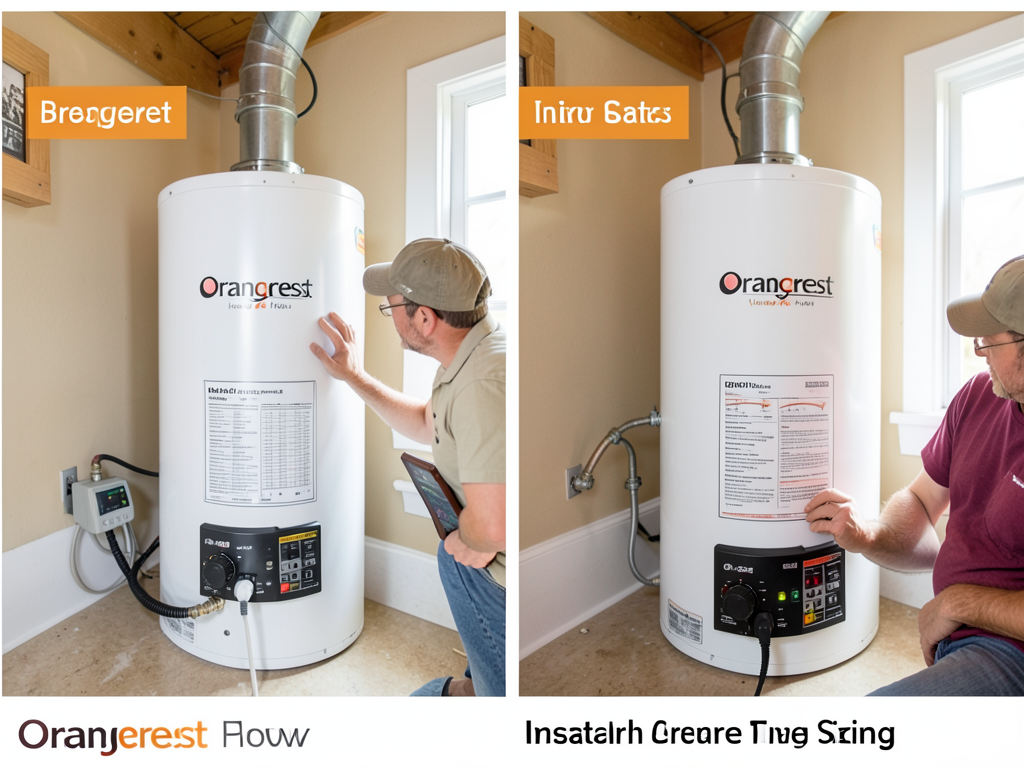
IMAGE 2 DESCRIPTION: Before and after installation photos showing proper water heater sizing in an Orangecrest home, with diagnostic tools measuring flow rates and temperature rise calculations.
Common Sizing Mistakes to Avoid
Don’t size based solely on household members. A retired couple uses far less hot water than a family with teenagers.
Avoid choosing the cheapest option without considering operating costs. A slightly more expensive efficient unit often pays for itself within 2-3 years.
Don’t ignore local factors like Orangecrest’s hard water or California’s strict emissions requirements. These affect both performance and compliance.
Emergency Replacement Considerations
When your current unit fails, you need quick decisions. Having sizing calculations ready prevents rushed choices that lead to dissatisfaction.
Emergency replacements often limit your options. Planning ahead allows you to choose the optimal unit rather than just what’s available.
Consider having a professional assessment done before emergencies occur, giving you time to research and budget properly.
Future-Proofing Your Choice
Consider potential family changes. Will teenagers soon be using multiple showers? Are elderly parents moving in who need longer shower times?
Energy costs continue rising. Investing in higher efficiency now provides long-term savings as utility rates increase.
Technology improvements happen rapidly. Choosing a unit with good upgrade potential protects your investment longer.
Final Sizing Checklist
- Calculate Peak Hour Demand
Add simultaneous hot water uses during busiest hour. Include all showers, appliances, and fixtures running at once.
- Measure Temperature Rise
Orangecrest’s groundwater at 65-70°F requires 40-45°F rise for comfortable showers. Factor this into FHR or GPM calculations.
- Account for Local Factors
Add 10-15% capacity for hard water scaling. Ensure compliance with Title 24 Ultra-Low NOx requirements.
- Choose Fuel Type
Natural gas offers fastest recovery for large families. Electric works for smaller households or where gas unavailable.
- Consider Installation Location
Attic saves space but needs leak protection. Garage requires seismic bracing. Outdoor needs freeze protection.
- Factor in Operating Costs
Gas typically $250-400 yearly. Electric $400-600. Heat pump $150-300 but needs space and moderate temperatures.
- Check Rebate Availability
Riverside Public Utilities offers up to $500 rebates. Federal tax credits may apply to Energy Star models.
- Schedule Professional Assessment
Have a licensed plumber verify gas line capacity, venting requirements, and permit needs before purchasing.
IMAGE 3 DESCRIPTION: Technician performing diagnostic flow rate test on existing plumbing system in Orangecrest home, measuring GPM to determine proper water heater sizing.
Frequently Asked Questions
How long should a water heater last in Orangecrest?
Standard tank water heaters typically last 8-12 years in Orangecrest due to hard water scaling. Tankless units can last 15-20 years with proper maintenance and annual descaling.
Can I install a larger water heater myself?
California law requires licensed plumbers for water heater installations. Improper installation voids warranties and may create safety hazards including gas leaks or carbon monoxide risks.
What size water heater do I need for a family of 6?
A family of six typically needs 65-75 gallon tank or 7-8 GPM tankless unit, assuming 3-4 bathrooms. Adjust upward if you have high-flow fixtures or simultaneous shower usage patterns.
Are tankless water heaters worth the extra cost?
Tankless units cost 50-100% more upfront but last longer and save 20-30% on energy costs. For large families in Orangecrest, they often pay for themselves within 5-7 years.
Ready to Get the Right Size Water Heater?
Don’t guess on sizing and end up with cold showers or wasted energy. Our Orangecrest plumbing experts provide professional assessments that consider your specific household patterns, local water conditions, and building requirements.
Call (951) 309-5599 today to schedule your water heater sizing consultation. We’ll help you choose the perfect unit that keeps your large family comfortable while saving you money on energy bills.
Pick up the phone and call (951) 309-5599 before the next morning rush leaves you with cold showers. Our team understands Orangecrest homes and can recommend the right size water heater for your family’s needs.
Don’t wait until your current unit fails. Contact us now at (951) 309-5599 to get expert sizing advice and ensure your family never runs out of hot water again.
{
“@context”: “https://schema.org”,
“@type”: “BlogPosting”,
“headline”: “How to choose the right size water heater for a large family in Orangecrest”,
“description”: “Learn how to size a water heater for your large family in Orangecrest. Avoid cold showers with our local sizing guide covering tank vs tankless, rebates, and codes.”,
“wordCount”: 1769,
“datePublished”: “2026-04-28T07:12:00.000Z”,
“dateModified”: “2026-04-28T07:12:00.000Z”,
“inLanguage”: “en-US”,
“mainEntityOfPage”: {
“@type”: “WebPage”,
“@id”: “https://evergreenplumbingriverside.com”
},
“publisher”: {
“@type”: “LocalBusiness”,
“name”: “Evergreen Plumbing Riverside”,
“url”: “https://evergreenplumbingriverside.com”
},
“author”: {
“@type”: “Organization”,
“name”: “Evergreen Plumbing Riverside”,
“url”: “https://evergreenplumbingriverside.com”
},
“image”: {
“@type”: “ImageObject”,
“url”: “https://evergreenplumbingriverside.com/wp-content/uploads/2026/03/how-to-choose-the-right-size-water-heater-for-a-la-1.png”
}
}
{
“@context”: “https://schema.org”,
“@type”: “Plumber”,
“name”: “Evergreen Plumbing Riverside”,
“url”: “https://evergreenplumbingriverside.com”,
“address”: {
“@type”: “PostalAddress”,
“addressLocality”: “Riverside”
},
“areaServed”: {
“@type”: “City”,
“name”: “Riverside”
}
}
{
“@context”: “https://schema.org”,
“@type”: “FAQPage”,
“mainEntity”: [
{
“@type”: “Question”,
“name”: “How long should a water heater last in Orangecrest?”,
“acceptedAnswer”: {
“@type”: “Answer”,
“text”: “Standard tank water heaters typically last 8-12 years in Orangecrest due to hard water scaling. Tankless units can last 15-20 years with proper maintenance and annual descaling.”
}
},
{
“@type”: “Question”,
“name”: “Can I install a larger water heater myself?”,
“acceptedAnswer”: {
“@type”: “Answer”,
“text”: “California law requires licensed plumbers for water heater installations. Improper installation voids warranties and may create safety hazards including gas leaks or carbon monoxide risks.”
}
},
{
“@type”: “Question”,
“name”: “What size water heater do I need for a family of 6?”,
“acceptedAnswer”: {
“@type”: “Answer”,
“text”: “A family of six typically needs 65-75 gallon tank or 7-8 GPM tankless unit, assuming 3-4 bathrooms. Adjust upward if you have high-flow fixtures or simultaneous shower usage patterns.”
}
},
{
“@type”: “Question”,
“name”: “Are tankless water heaters worth the extra cost?”,
“acceptedAnswer”: {
“@type”: “Answer”,
“text”: “Tankless units cost 50-100% more upfront but last longer and save 20-30% on energy costs. For large families in Orangecrest, they often pay for themselves within 5-7 years.”
}
},
{
“@type”: “Question”,
“name”: “Ready to Get the Right Size Water Heater?”,
“acceptedAnswer”: {
“@type”: “Answer”,
“text”: “Don’t guess on sizing and end up with cold showers or wasted energy. Our Orangecrest plumbing experts provide professional assessments that consider your specific household patterns, local water conditions, and building requirements.”
}
}
]
}
{
“@context”: “https://schema.org”,
“@type”: “HowTo”,
“name”: “How to Choose Water Heater Size”,
“step”: [
{
“@type”: “HowToStep”,
“position”: 1,
“name”: “Calculate Peak Hour Demand”,
“text”: “Add simultaneous hot water uses during busiest hour. Include all showers, appliances, and fixtures running at once.”
},
{
“@type”: “HowToStep”,
“position”: 2,
“name”: “Measure Temperature Rise”,
“text”: “Orangecrest’s groundwater at 65-70°F requires 40-45°F rise for comfortable showers. Factor this into FHR or GPM calculations.”
},
{
“@type”: “HowToStep”,
“position”: 3,
“name”: “Account for Local Factors”,
“text”: “Add 10-15% capacity for hard water scaling. Ensure compliance with Title 24 Ultra-Low NOx requirements.”
},
{
“@type”: “HowToStep”,
“position”: 4,
“name”: “Choose Fuel Type”,
“text”: “Natural gas offers fastest recovery for large families. Electric works for smaller households or where gas unavailable.”
},
{
“@type”: “HowToStep”,
“position”: 5,
“name”: “Consider Installation Location”,
“text”: “Attic saves space but needs leak protection. Garage requires seismic bracing. Outdoor needs freeze protection.”
},
{
“@type”: “HowToStep”,
“position”: 6,
“name”: “Factor in Operating Costs”,
“text”: “Gas typically $250-400 yearly. Electric $400-600. Heat pump $150-300 but needs space and moderate temperatures.”
},
{
“@type”: “HowToStep”,
“position”: 7,
“name”: “Check Rebate Availability”,
“text”: “Riverside Public Utilities offers up to $500 rebates. Federal tax credits may apply to Energy Star models.”
},
{
“@type”: “HowToStep”,
“position”: 8,
“name”: “Schedule Professional Assessment”,
“text”: “Have a licensed plumber verify gas line capacity, venting requirements, and permit needs before purchasing.”
}
],
“image”: “https://evergreenplumbingriverside.com/wp-content/uploads/2026/03/how-to-choose-the-right-size-water-heater-for-a-la-1.png”
}
{
“@context”: “https://schema.org”,
“@type”: “BreadcrumbList”,
“itemListElement”: [
{
“@type”: “ListItem”,
“position”: 1,
“name”: “Home”,
“item”: “https://evergreenplumbingriverside.com”
},
{
“@type”: “ListItem”,
“position”: 2,
“name”: “Blog”,
“item”: “https://evergreenplumbingriverside.com/blog”
},
{
“@type”: “ListItem”,
“position”: 3,
“name”: “How to choose the right size water heater for a large family in Orangecrest”
}
]
}
{
“@context”: “https://schema.org”,
“@type”: “Service”,
“serviceType”: “Plumbing”,
“provider”: {
“@type”: “LocalBusiness”,
“name”: “Evergreen Plumbing Riverside”,
“url”: “https://evergreenplumbingriverside.com”
},
“areaServed”: {
“@type”: “City”,
“name”: “Riverside”
},
“description”: “Learn how to size a water heater for your large family in Orangecrest. Avoid cold showers with our local sizing guide covering tank vs tankless, rebates, and codes.”
}