
The process of converting from a septic tank to city sewer in Woodcrest
Homeowners in Woodcrest are increasingly making the switch from aging septic systems to reliable city sewer connections. The Western Municipal Water District has been expanding infrastructure throughout the area, making sewer hookups more accessible than ever. Converting eliminates leach field failures, increases property value, and removes the need for septic pumping maintenance. The process involves multiple steps including permits from the Riverside County Department of Environmental Health, excavation work, and proper septic tank abandonment procedures. Western Municipal Water District.
Woodcrest’s specific soil conditions present unique challenges during conversion. The area’s clay-rich soil requires careful compaction testing during backfill operations, and many properties sit on sloped terrain that may need grinder pumps for proper wastewater flow. Understanding these local factors helps homeowners prepare for what to expect during the conversion timeline. How to find a local plumber in Mission Grove who actually answers the phone.
Why Woodcrest homeowners are converting now
Several factors are driving Woodcrest residents to convert from septic to sewer systems in 2026. The Western Municipal Water District has been actively extending sewer lines along Van Buren Boulevard and connecting side streets, making service available to more properties each year. Properties near the Woodcrest Library and along Van Buren Boulevard corridor have the highest conversion rates due to proximity to existing infrastructure. Trenchless sewer repair options for historic homes in Victoria Park.
Property value increases average 3-5% after conversion, according to Riverside County real estate assessments. The elimination of leach field failures provides peace of mind, especially during heavy rainfall seasons when Woodcrest’s clay soil becomes saturated. Additionally, the county’s septic abandonment requirements have become more stringent, making proper conversion the most cost-effective long-term solution. Riverside County Department of Environmental Health.
Our step-by-step conversion process
The conversion process follows a specific sequence to ensure compliance with Riverside County regulations and proper system functionality. Each step requires coordination between plumbers, inspectors, and utility providers. Plumbing Riverside.
- Site Assessment and Planning
Our technicians evaluate your property’s topography, soil conditions, and existing septic system location. We determine the most efficient route for the new sewer lateral and assess whether a grinder pump is needed based on Woodcrest’s sloped terrain.
- Permit Acquisition
We obtain the required permits from the Riverside County Department of Environmental Health for septic abandonment and from the Western Municipal Water District for sewer connection. This includes submitting detailed site plans and paying applicable capacity fees. Emergency Water Shut-Off Service.
- Septic Tank Abandonment
The existing septic tank must be properly abandoned according to California Code of Regulations Title 23. This involves pumping out all contents, removing or crushing the tank, and backfilling with engineered material while maintaining proper compaction ratios.
- Sewer Lateral Installation
We excavate a trench from your home to the main sewer line, install Schedule 40 PVC pipe with proper slope (minimum 1/4 inch per foot), and connect to the municipal system. Trenchless boring may be used in areas with mature landscaping.
- Final Inspection and Restoration
The Riverside County inspector verifies proper abandonment and installation. We then restore landscaping, repair any surface damage, and ensure all connections meet Western Municipal Water District standards.
The entire process typically takes 2-3 weeks from permit approval to final inspection, though weather delays can extend timelines during winter months when Woodcrest experiences occasional rainfall.
Navigating Woodcrest permits and regulations
Converting from septic to sewer in Woodcrest requires compliance with multiple regulatory bodies. The Riverside County Department of Environmental Health oversees septic system abandonment under California Code of Regulations Title 23, Section 3622. This code mandates specific procedures for tank removal or crushing and requires documentation of proper backfill procedures.
The Western Municipal Water District charges capacity fees based on the size of your home and expected wastewater generation. Current fees in Woodcrest range from $3,500 to $7,500 depending on property size. The district also requires a licensed plumber to perform the connection work and submit a pressure test certificate before service activation.
Local building codes require specific materials and installation methods. Schedule 40 PVC pipe is mandatory for sewer laterals, and all joints must be properly solvent-welded. Cleanouts must be installed at specified intervals, and the final connection to the main line requires a flexible coupling to accommodate ground movement.

Image: Technician using compaction testing equipment to verify proper soil density during septic tank backfill in Woodcrest, California.
Estimated costs and financing options
The total cost of converting from septic to sewer in Woodcrest varies based on several factors. Distance from the main sewer line is the primary cost driver, with properties along Van Buren Boulevard typically paying less than those on interior streets. Soil conditions also affect pricing, as rocky or clay-heavy soils require more excavation time and specialized equipment.
Additional cost factors include:
- Septic tank size and construction material
- Landscape restoration requirements
- Need for grinder pump installation
- Permit and capacity fees
- Restoration of hardscaping or driveways
Many homeowners qualify for financing through the Western Municipal Water District’s partnership programs. These low-interest loans can spread the cost over 5-10 years, making the conversion more affordable. Some properties may also qualify for partial rebates if converting as part of a larger neighborhood infrastructure project. Why homeowners in Orangecrest are upgrading to tankless water heaters this year.
Frequently asked questions about sewer hookups
Do I have to remove my old septic tank?
Yes, California regulations require either complete removal or proper crushing and backfilling of the septic tank. Simply abandoning an intact tank creates a safety hazard and environmental risk. The tank must be either removed entirely or crushed in place and filled with sand or gravel to prevent future collapse.
How long will my water be off during the conversion?
Water service is typically interrupted for 4-8 hours during the final connection to the main sewer line. We schedule this work during daytime hours and notify you 48 hours in advance. Most homeowners can plan around this brief outage without significant disruption.
What happens to my landscaping during the conversion?
The excavation process requires a trench approximately 24-36 inches wide and 5-6 feet deep. We take precautions to minimize damage to existing landscaping, but some disturbance is unavoidable. Our restoration process includes backfilling, compaction, and replacement of sod or plants. Hardscaping restoration may require additional specialized contractors.
Will I need a grinder pump for my property?
Properties with elevation changes greater than 8 feet between the home and main sewer line typically require a grinder pump. Woodcrest’s sloped terrain means many properties in the foothills near March Mountain may need this additional equipment. We assess this requirement during the initial site evaluation.
How does the conversion affect my property taxes?
The conversion itself doesn’t trigger a property tax reassessment in Riverside County. However, the increased property value from having a modern sewer connection may affect your assessment when the property sells or undergoes major renovations in the future.
Comparing septic vs. sewer systems in Woodcrest
Understanding the long-term implications of each system helps homeowners make informed decisions. The following comparison shows key differences between maintaining a septic system versus converting to city sewer.
| Factor | Septic System | City Sewer |
|---|---|---|
| Initial Cost | $5,000-8,000 installation | $8,000-15,000 conversion |
| Monthly Cost | $0 (no sewer fees) | $45-75 WMWD fees |
| Maintenance | Pumping every 3-5 years ($300-500) | None required |
| Lifespan | 20-30 years with proper care | 50+ years municipal infrastructure |
| Property Value Impact | Neutral to slightly negative | 3-5% increase typically |
| Environmental Risk | Potential groundwater contamination | Professional treatment and monitoring |
The analysis shows that while septic systems have lower monthly costs, the long-term reliability and property value benefits of sewer connections often outweigh these savings. Additionally, aging septic systems in Woodcrest frequently require expensive repairs or premature replacement.
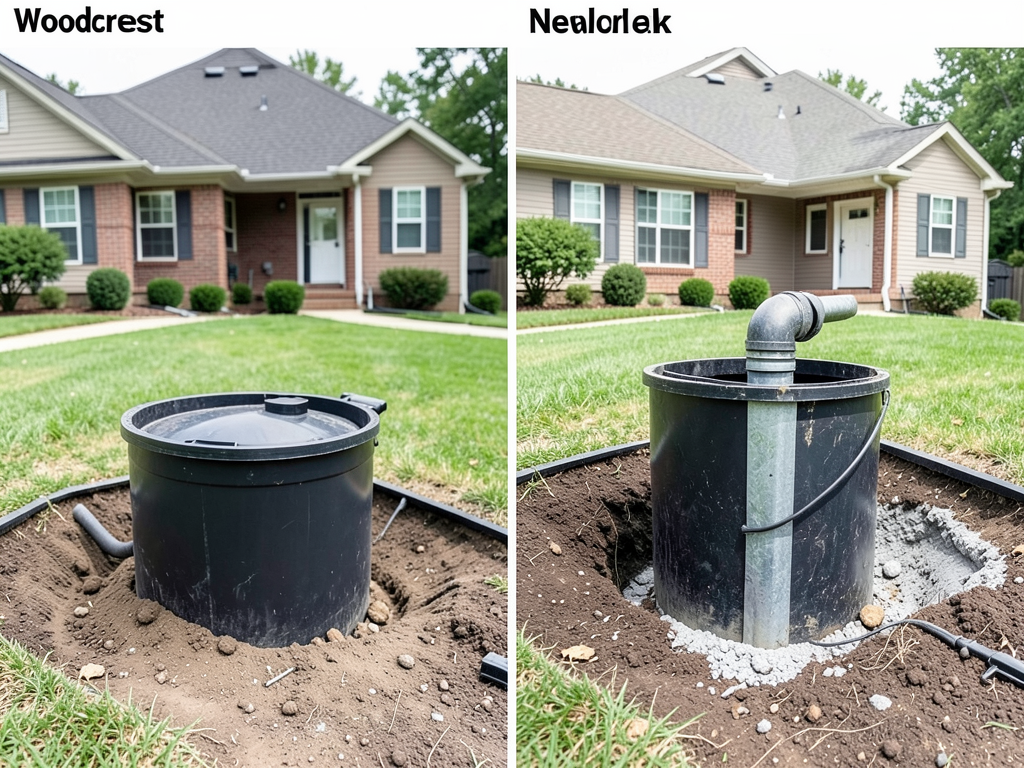
Image: Before and after comparison showing septic tank removal and new sewer lateral installation in a Woodcrest residential property.
Local considerations for Woodcrest properties
Woodcrest’s specific geographic and regulatory environment creates unique considerations for septic to sewer conversions. The area’s proximity to March Air Reserve Base means some properties fall under additional environmental regulations due to groundwater protection requirements. Properties within 500 feet of the Santa Ana River watershed have additional permitting requirements to prevent contamination.
The soil composition in Woodcrest varies significantly by location. Properties near Van Buren Boulevard tend to have more compacted clay soil, while those closer to the foothills have a mix of clay and decomposed granite. This variation affects excavation difficulty and backfill procedures. We use soil testing to determine the appropriate compaction methods for each property.
Weather patterns in Woodcrest also impact conversion timing. The area experiences approximately 12 inches of rainfall annually, with most precipitation occurring between November and March. We schedule excavations during dry periods to prevent trench collapse and ensure proper soil compaction. Summer conversions often proceed more quickly due to predictable weather conditions.
Preparing your property for conversion
Homeowners can take several steps to prepare for the conversion process. First, locate all underground utilities using the Dig Alert service at least 48 hours before work begins. This prevents damage to irrigation lines, electrical conduits, or communication cables during excavation.
Clear the work area of movable obstacles including patio furniture, potted plants, and decorative items. Identify any special landscaping features you want to preserve, as these may require additional protection or temporary relocation during the project. Document the existing landscape with photos to assist with restoration planning.
Notify your household about the temporary water shutoff and plan accordingly. Consider scheduling the final connection on a day when water usage is typically lowest. If you have a home-based business or medical equipment requiring continuous water service, inform us during the planning phase so we can make appropriate accommodations.
Image: Technician performing hydrostatic pressure test on newly installed sewer lateral to verify leak-free connections before backfilling.
Making the decision to convert
Deciding whether to convert from septic to sewer requires evaluating several factors specific to your situation. Consider the age and condition of your existing septic system. Systems over 20 years old often require significant repairs or replacement within the next 5-10 years, making conversion more cost-effective in the long run.
Evaluate your future plans for the property. If you intend to sell within the next few years, the increased property value and marketability of a sewer-connected home often justifies the conversion cost. Buyers frequently view septic systems as potential liabilities, while sewer connections represent modern, reliable infrastructure.
Assess your tolerance for maintenance responsibilities. Septic systems require ongoing attention including regular pumping, careful water usage monitoring, and awareness of what goes down drains. City sewer eliminates these concerns, transferring maintenance responsibility to the municipal utility.
The Western Municipal Water District occasionally offers neighborhood-wide conversion programs with reduced fees for multiple properties converting simultaneously. These programs can significantly reduce costs if your neighbors are also considering conversion. Contact our office to learn about current availability in your specific Woodcrest area.
Next steps for Woodcrest homeowners
If you’re considering converting from septic to sewer, the first step is a professional site evaluation. Our technicians can assess your property’s specific conditions, determine connection feasibility, and provide a detailed cost estimate. This evaluation typically takes 1-2 hours and includes soil testing, topographic assessment, and identification of potential challenges.
During the evaluation, we’ll explain the entire process, answer your questions about permits and regulations, and help you understand the timeline for your specific property. We can also discuss financing options and any current Western Municipal Water District incentives that might apply to your situation.
Converting from septic to sewer represents a significant investment in your property’s future. The process requires careful planning and execution, but the long-term benefits of reliable wastewater service and increased property value make it worthwhile for many Woodcrest homeowners. Our experienced team has completed dozens of successful conversions throughout the area and understands the specific challenges of working in Woodcrest’s unique environment.
Call (951) 309-5599 today to schedule your free site evaluation and take the first step toward reliable city sewer service. Our team will guide you through every step of the conversion process, ensuring your project meets all Riverside County requirements and provides years of trouble-free service.
Frequently Asked Questions
How long does the entire septic to sewer conversion process take?
The complete process typically takes 2-3 weeks from permit approval to final inspection. This includes 2-3 days for excavation and installation, plus time for inspections and restoration work. Weather delays can extend timelines, particularly during winter months when Woodcrest experiences rainfall.
Will I need to be home during the conversion?
You don’t need to be home for most of the work, but you must be available for the initial site assessment and final inspection. We coordinate access to your property and keep you informed throughout the process. The final connection requires brief water shutoff, so we schedule this at a convenient time.
What permits are required for septic to sewer conversion in Woodcrest?
You need permits from both the Riverside County Department of Environmental Health for septic abandonment and the Western Municipal Water District for sewer connection. Our team handles all permit acquisition, including submitting required plans and paying applicable fees. The process typically takes 2-4 weeks for approval.
Can I convert if my property is on a slope?
Yes, sloped properties in Woodcrest often require grinder pumps to ensure proper wastewater flow. During our initial assessment, we evaluate the elevation change between your home and the main sewer line. If a grinder pump is needed, we’ll include it in your project plan and explain the additional requirements.
{
“@context”: “https://schema.org”,
“@type”: “BlogPosting”,
“headline”: “The process of converting from a septic tank to city sewer in Woodcrest”,
“description”: “Learn the complete septic to sewer conversion process in Woodcrest. From permits to final hookup, get expert guidance on switching from septic to city sewer in Riverside County.”,
“wordCount”: 2253,
“datePublished”: “2026-04-01T07:02:00.000Z”,
“dateModified”: “2026-04-01T07:02:00.000Z”,
“inLanguage”: “en-US”,
“mainEntityOfPage”: {
“@type”: “WebPage”,
“@id”: “https://evergreenplumbingriverside.com”
},
“publisher”: {
“@type”: “LocalBusiness”,
“name”: “Evergreen Plumbing Riverside”,
“url”: “https://evergreenplumbingriverside.com”
},
“author”: {
“@type”: “Organization”,
“name”: “Evergreen Plumbing Riverside”,
“url”: “https://evergreenplumbingriverside.com”
},
“image”: {
“@type”: “ImageObject”,
“url”: “https://evergreenplumbingriverside.com/wp-content/uploads/2026/03/the-process-of-converting-from-a-septic-tank-to-ci-1.png”
}
}
{
“@context”: “https://schema.org”,
“@type”: “Plumber”,
“name”: “Evergreen Plumbing Riverside”,
“url”: “https://evergreenplumbingriverside.com”,
“address”: {
“@type”: “PostalAddress”,
“addressLocality”: “Riverside”
},
“areaServed”: {
“@type”: “City”,
“name”: “Riverside”
}
}
{
“@context”: “https://schema.org”,
“@type”: “FAQPage”,
“mainEntity”: [
{
“@type”: “Question”,
“name”: “Do I have to remove my old septic tank?”,
“acceptedAnswer”: {
“@type”: “Answer”,
“text”: “Yes, California regulations require either complete removal or proper crushing and backfilling of the septic tank. Simply abandoning an intact tank creates a safety hazard and environmental risk. The tank must be either removed entirely or crushed in place and filled with sand or gravel to prevent future collapse.”
}
},
{
“@type”: “Question”,
“name”: “How long will my water be off during the conversion?”,
“acceptedAnswer”: {
“@type”: “Answer”,
“text”: “Water service is typically interrupted for 4-8 hours during the final connection to the main sewer line. We schedule this work during daytime hours and notify you 48 hours in advance. Most homeowners can plan around this brief outage without significant disruption.”
}
},
{
“@type”: “Question”,
“name”: “What happens to my landscaping during the conversion?”,
“acceptedAnswer”: {
“@type”: “Answer”,
“text”: “The excavation process requires a trench approximately 24-36 inches wide and 5-6 feet deep. We take precautions to minimize damage to existing landscaping, but some disturbance is unavoidable. Our restoration process includes backfilling, compaction, and replacement of sod or plants. Hardscaping restoration may require additional specialized contractors.”
}
},
{
“@type”: “Question”,
“name”: “Will I need a grinder pump for my property?”,
“acceptedAnswer”: {
“@type”: “Answer”,
“text”: “Properties with elevation changes greater than 8 feet between the home and main sewer line typically require a grinder pump. Woodcrest’s sloped terrain means many properties in the foothills near March Mountain may need this additional equipment. We assess this requirement during the initial site evaluation.”
}
},
{
“@type”: “Question”,
“name”: “How does the conversion affect my property taxes?”,
“acceptedAnswer”: {
“@type”: “Answer”,
“text”: “The conversion itself doesn’t trigger a property tax reassessment in Riverside County. However, the increased property value from having a modern sewer connection may affect your assessment when the property sells or undergoes major renovations in the future.”
}
},
{
“@type”: “Question”,
“name”: “How long does the entire septic to sewer conversion process take?”,
“acceptedAnswer”: {
“@type”: “Answer”,
“text”: “The complete process typically takes 2-3 weeks from permit approval to final inspection. This includes 2-3 days for excavation and installation, plus time for inspections and restoration work. Weather delays can extend timelines, particularly during winter months when Woodcrest experiences rainfall.”
}
},
{
“@type”: “Question”,
“name”: “Will I need to be home during the conversion?”,
“acceptedAnswer”: {
“@type”: “Answer”,
“text”: “You don’t need to be home for most of the work, but you must be available for the initial site assessment and final inspection. We coordinate access to your property and keep you informed throughout the process. The final connection requires brief water shutoff, so we schedule this at a convenient time.”
}
},
{
“@type”: “Question”,
“name”: “What permits are required for septic to sewer conversion in Woodcrest?”,
“acceptedAnswer”: {
“@type”: “Answer”,
“text”: “You need permits from both the Riverside County Department of Environmental Health for septic abandonment and the Western Municipal Water District for sewer connection. Our team handles all permit acquisition, including submitting required plans and paying applicable fees. The process typically takes 2-4 weeks for approval.”
}
},
{
“@type”: “Question”,
“name”: “Can I convert if my property is on a slope?”,
“acceptedAnswer”: {
“@type”: “Answer”,
“text”: “Yes, sloped properties in Woodcrest often require grinder pumps to ensure proper wastewater flow. During our initial assessment, we evaluate the elevation change between your home and the main sewer line. If a grinder pump is needed, we’ll include it in your project plan and explain the additional requirements.”
}
}
]
}
{
“@context”: “https://schema.org”,
“@type”: “HowTo”,
“name”: “Septic to Sewer Conversion Process”,
“step”: [
{
“@type”: “HowToStep”,
“position”: 1,
“name”: “Site Assessment and Planning”,
“text”: “Our technicians evaluate your property’s topography, soil conditions, and existing septic system location. We determine the most efficient route for the new sewer lateral and assess whether a grinder pump is needed based on Woodcrest’s sloped terrain.”
},
{
“@type”: “HowToStep”,
“position”: 2,
“name”: “Permit Acquisition”,
“text”: “We obtain the required permits from the Riverside County Department of Environmental Health for septic abandonment and from the Western Municipal Water District for sewer connection. This includes submitting detailed site plans and paying applicable capacity fees. Emergency Water Shut-Off Service.”
},
{
“@type”: “HowToStep”,
“position”: 3,
“name”: “Septic Tank Abandonment”,
“text”: “The existing septic tank must be properly abandoned according to California Code of Regulations Title 23. This involves pumping out all contents, removing or crushing the tank, and backfilling with engineered material while maintaining proper compaction ratios.”
},
{
“@type”: “HowToStep”,
“position”: 4,
“name”: “Sewer Lateral Installation”,
“text”: “We excavate a trench from your home to the main sewer line, install Schedule 40 PVC pipe with proper slope (minimum 1/4 inch per foot), and connect to the municipal system. Trenchless boring may be used in areas with mature landscaping.”
},
{
“@type”: “HowToStep”,
“position”: 5,
“name”: “Final Inspection and Restoration”,
“text”: “The Riverside County inspector verifies proper abandonment and installation. We then restore landscaping, repair any surface damage, and ensure all connections meet Western Municipal Water District standards.”
}
],
“image”: “https://evergreenplumbingriverside.com/wp-content/uploads/2026/03/the-process-of-converting-from-a-septic-tank-to-ci-1.png”
}
{
“@context”: “https://schema.org”,
“@type”: “BreadcrumbList”,
“itemListElement”: [
{
“@type”: “ListItem”,
“position”: 1,
“name”: “Home”,
“item”: “https://evergreenplumbingriverside.com”
},
{
“@type”: “ListItem”,
“position”: 2,
“name”: “Blog”,
“item”: “https://evergreenplumbingriverside.com/blog”
},
{
“@type”: “ListItem”,
“position”: 3,
“name”: “The process of converting from a septic tank to city sewer in Woodcrest”
}
]
}
{
“@context”: “https://schema.org”,
“@type”: “Service”,
“serviceType”: “Plumbing”,
“provider”: {
“@type”: “LocalBusiness”,
“name”: “Evergreen Plumbing Riverside”,
“url”: “https://evergreenplumbingriverside.com”
},
“areaServed”: {
“@type”: “City”,
“name”: “Riverside”
},
“description”: “Learn the complete septic to sewer conversion process in Woodcrest. From permits to final hookup, get expert guidance on switching from septic to city sewer in Riverside County.”
}